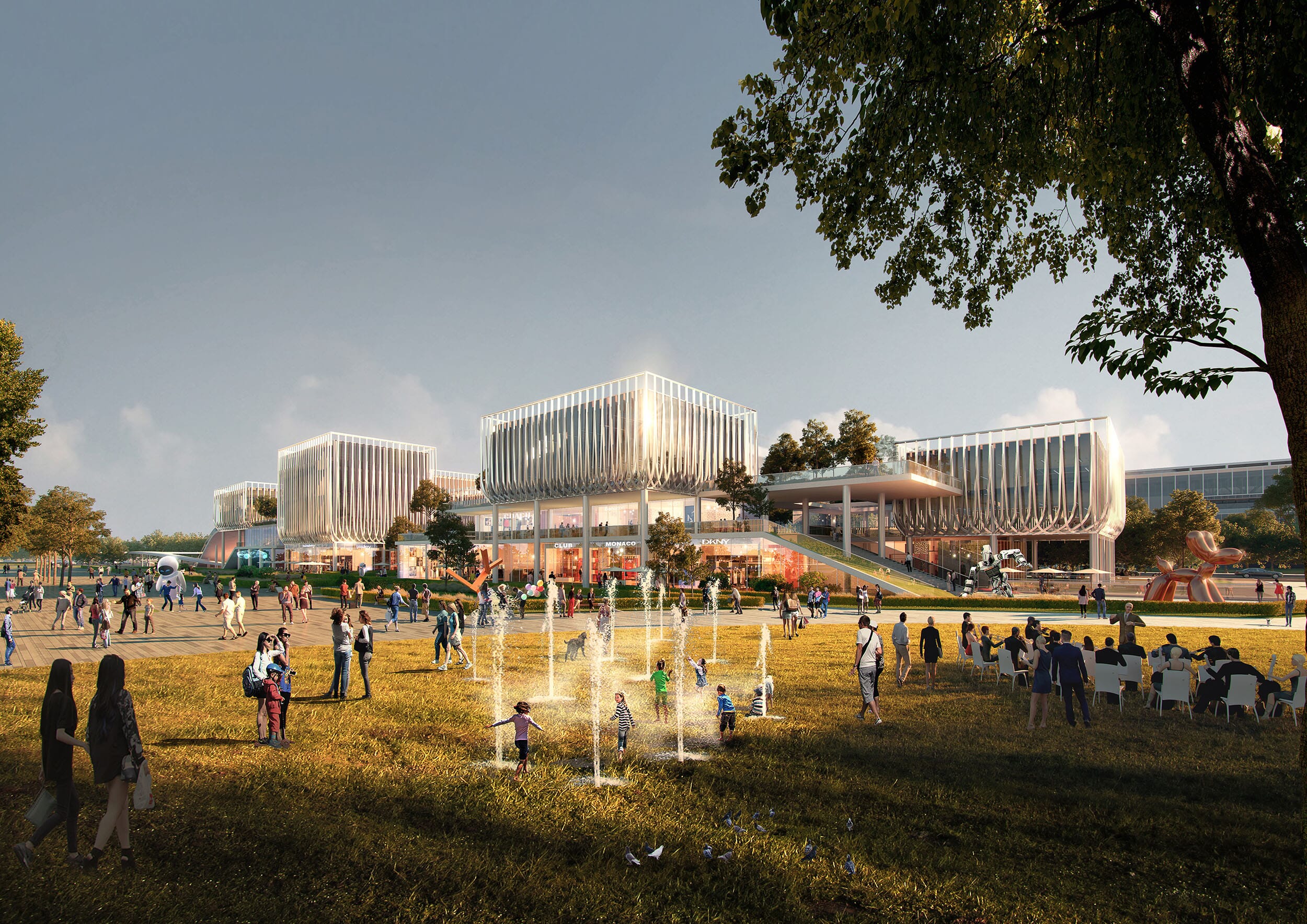
National Cybersecurity Center, Phase II
网安二期
Phase I was already there, and Phase II's first job was to carry on. Rather than enter a dialogue, we took Phase I as given: its grid, its rhythm of floors, its setbacks. The new phase opens more ground for research and incubation while leaving a continuous public north-south axis through the campus. Infrastructure work is often a matter of doing the right thing without being noticed.
- Year
- 2022
- Location
- Wuhan, Hubei
- Typology
- Civic / infrastructure
- Status
- schematic
Carrying Phase I forward
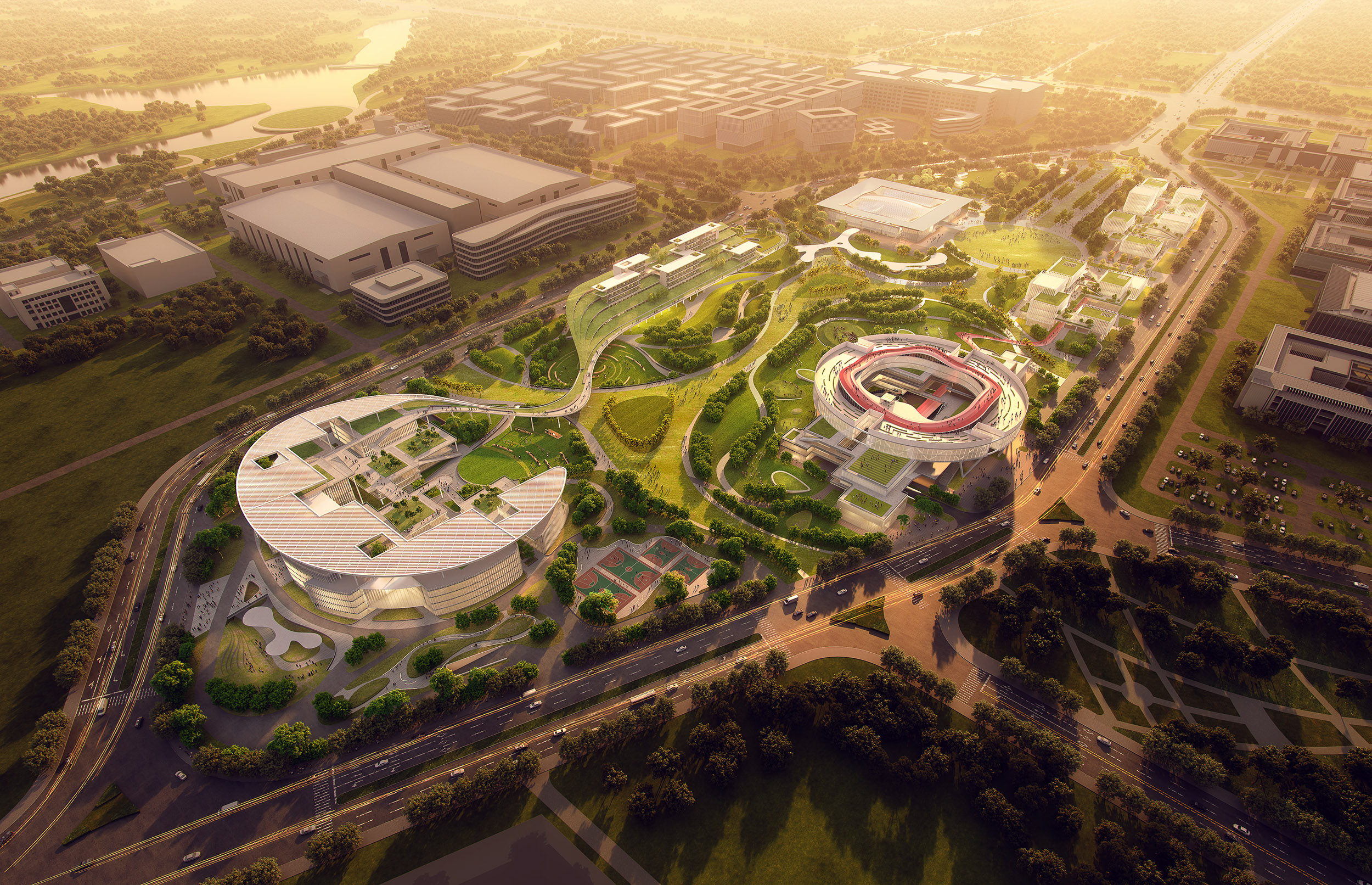
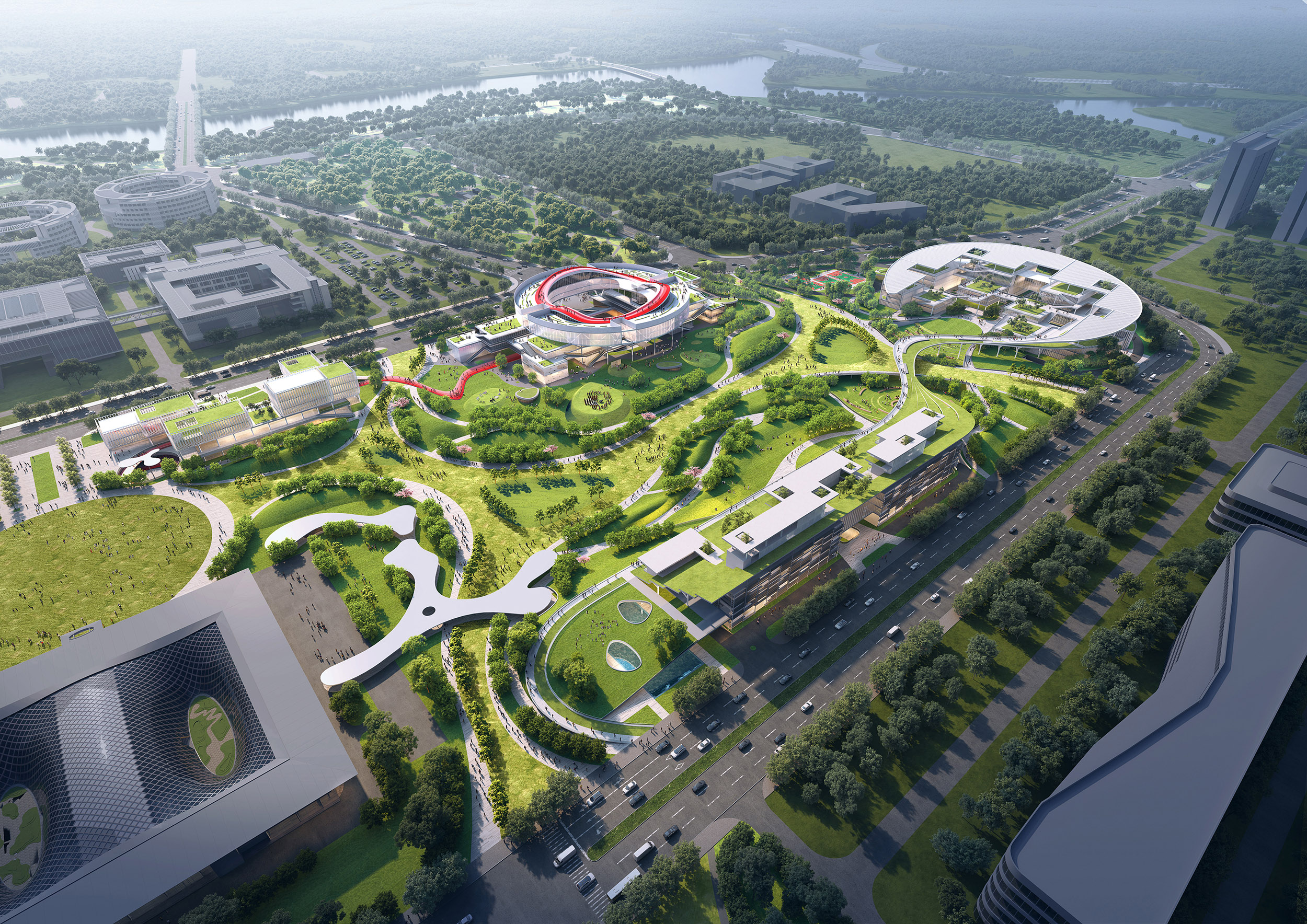
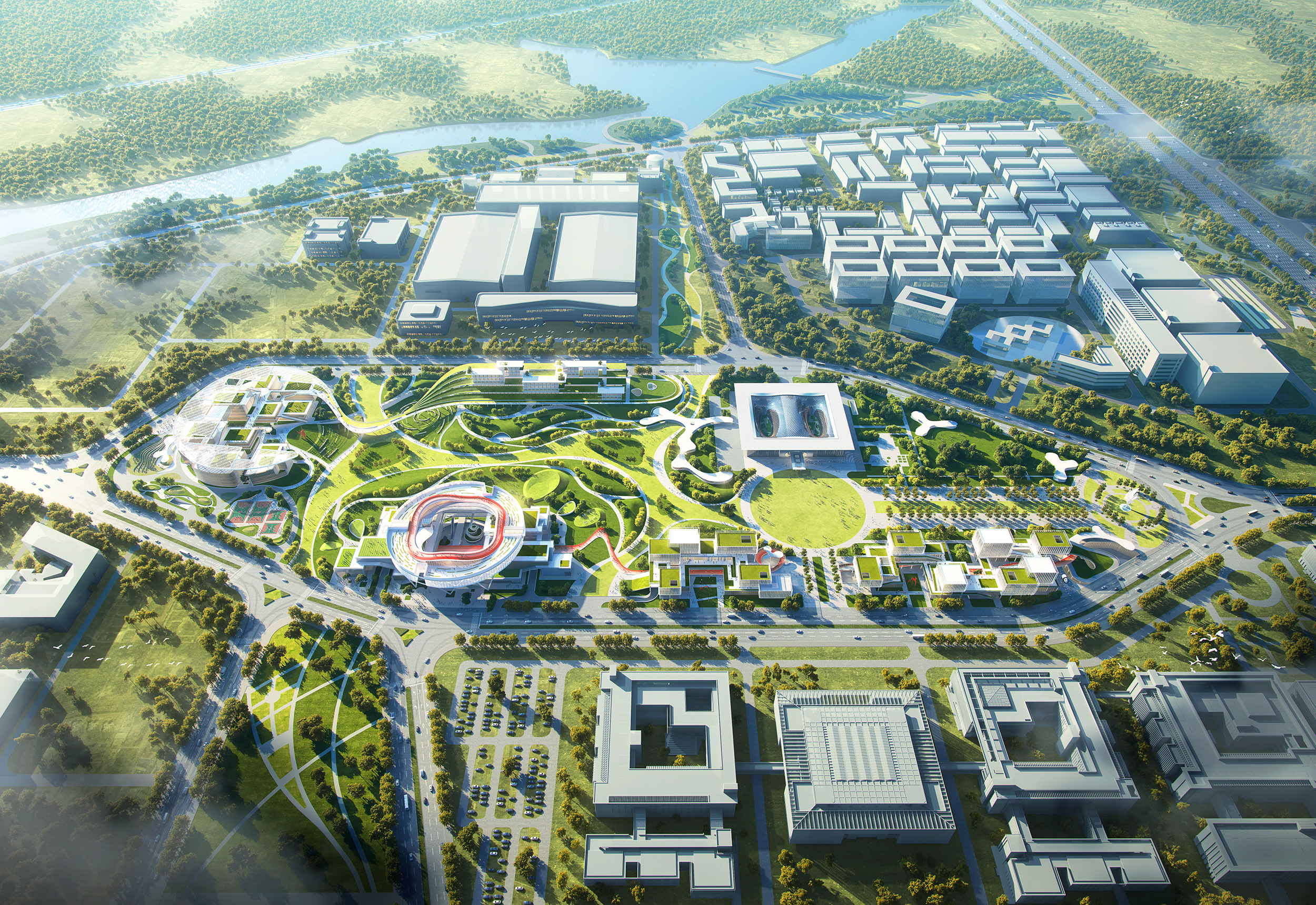
Phase I was already there: its grid, its rhythm of floors, the curve of its roof, all of it settled fact. We did not treat it as something to answer back to or to outdo. We read it once, carefully, and then carried on from where it ended. The exhibition hall’s curved roof rises on the eastern side; Phase II reaches westward, and along the same north-south axis we let down a long, low band of research and incubation volumes.
The programme Phase II had to deliver was clear enough: more floor area for research and incubation, an examination and conference complex, a supporting hotel, and a commercial frontage facing both the campus and the city. But the quantum was given, the site was given, and the geometry of Phase I was given; what remained for us to decide was simply how the new pieces should land.
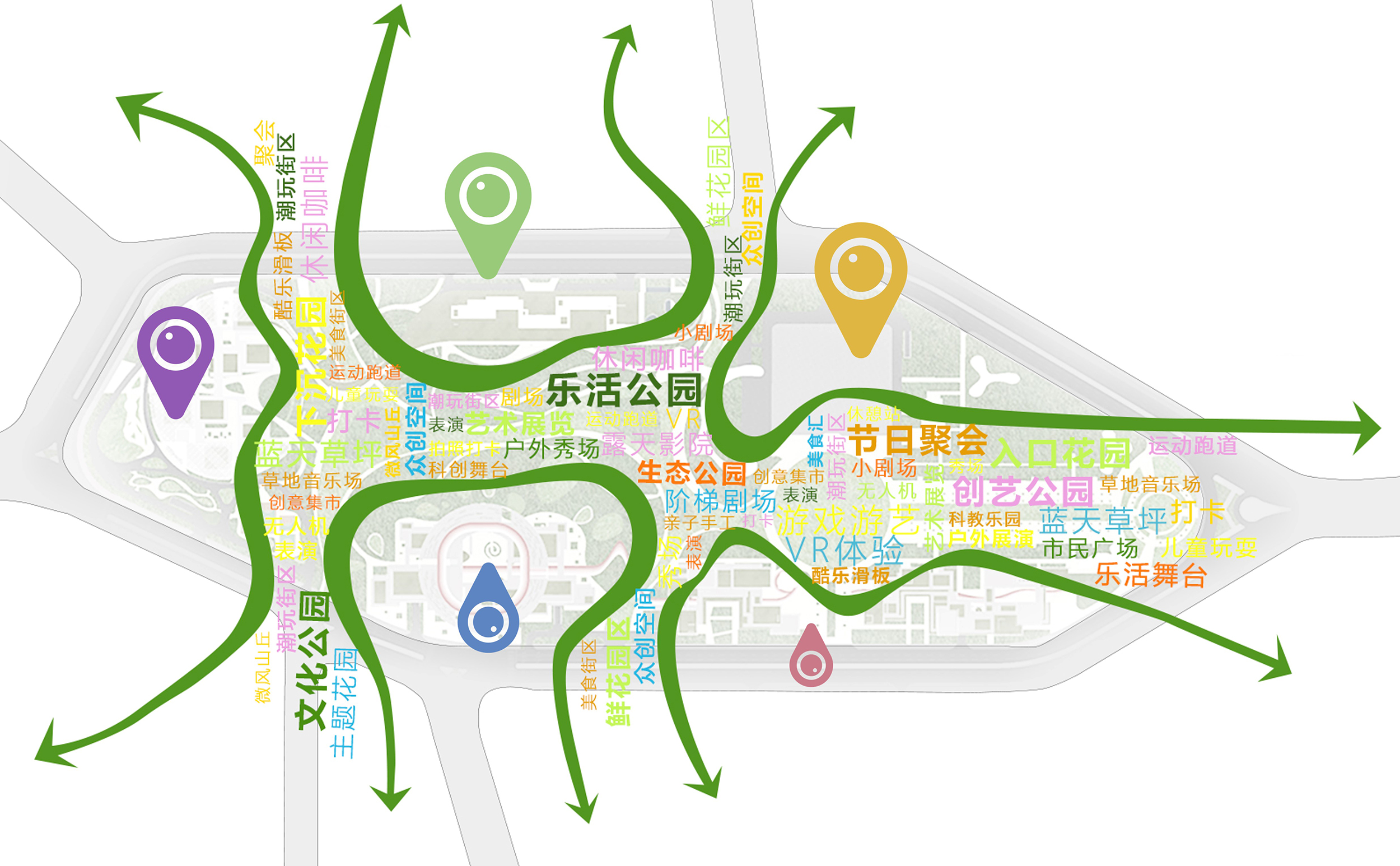
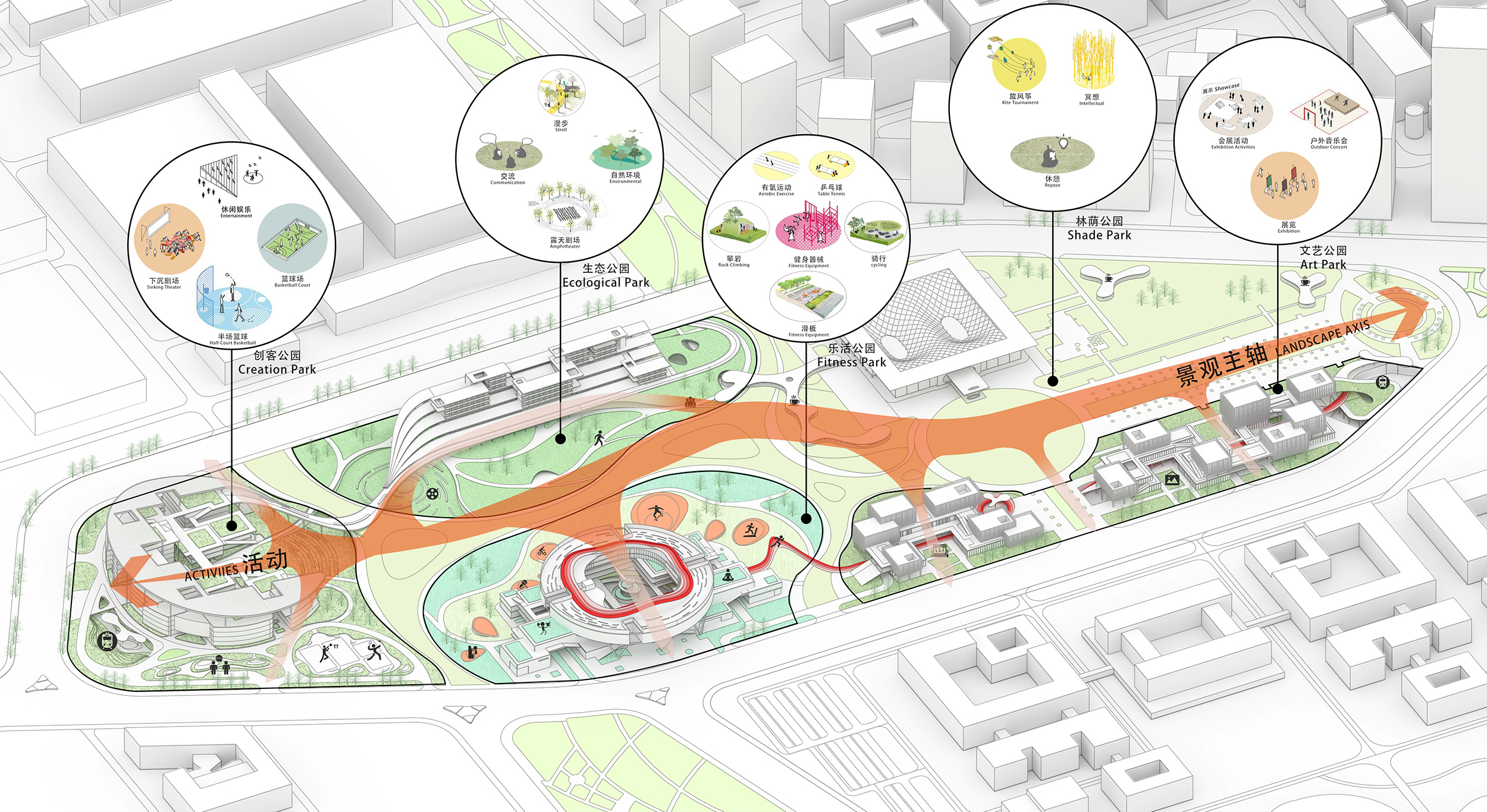
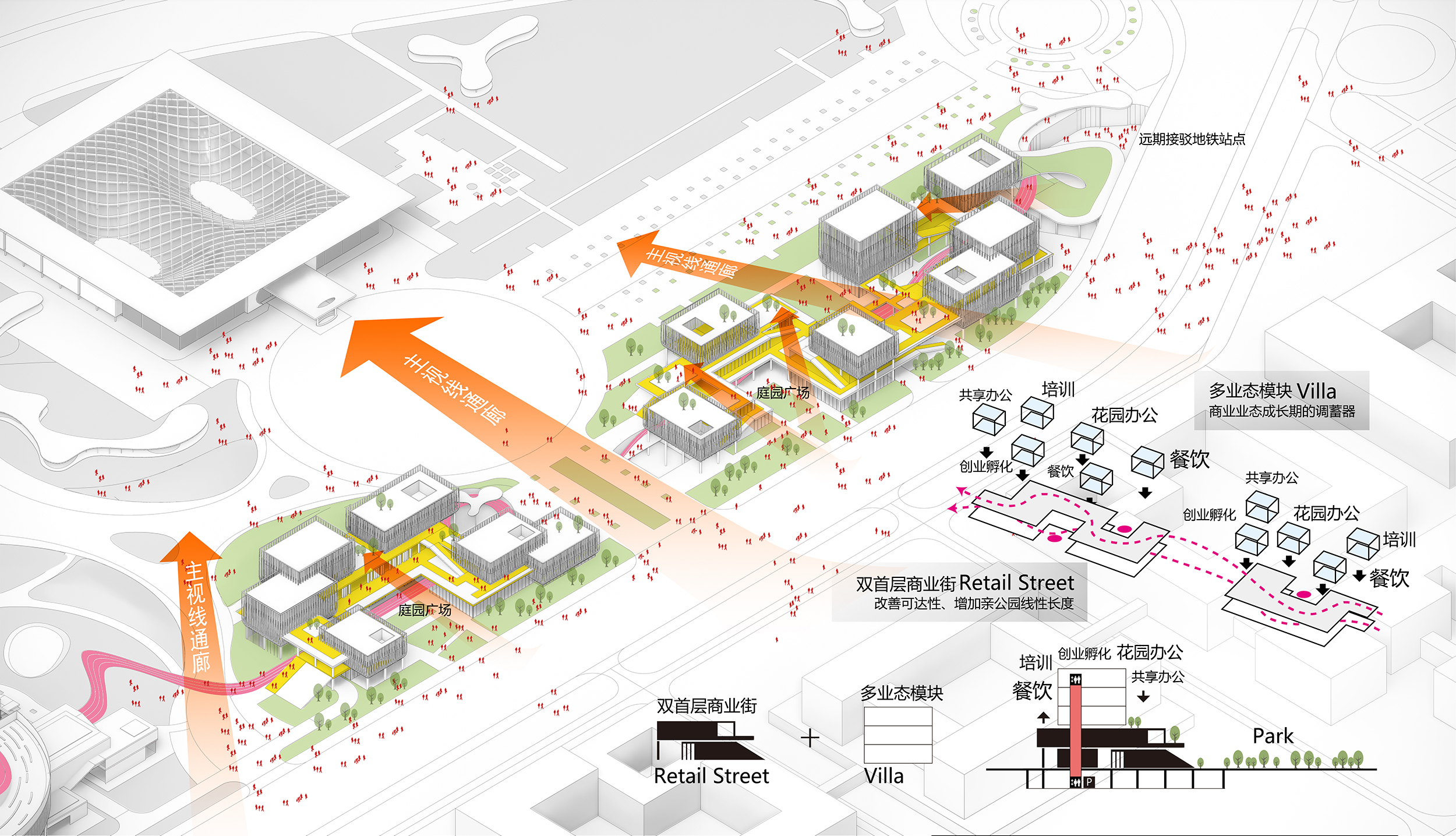
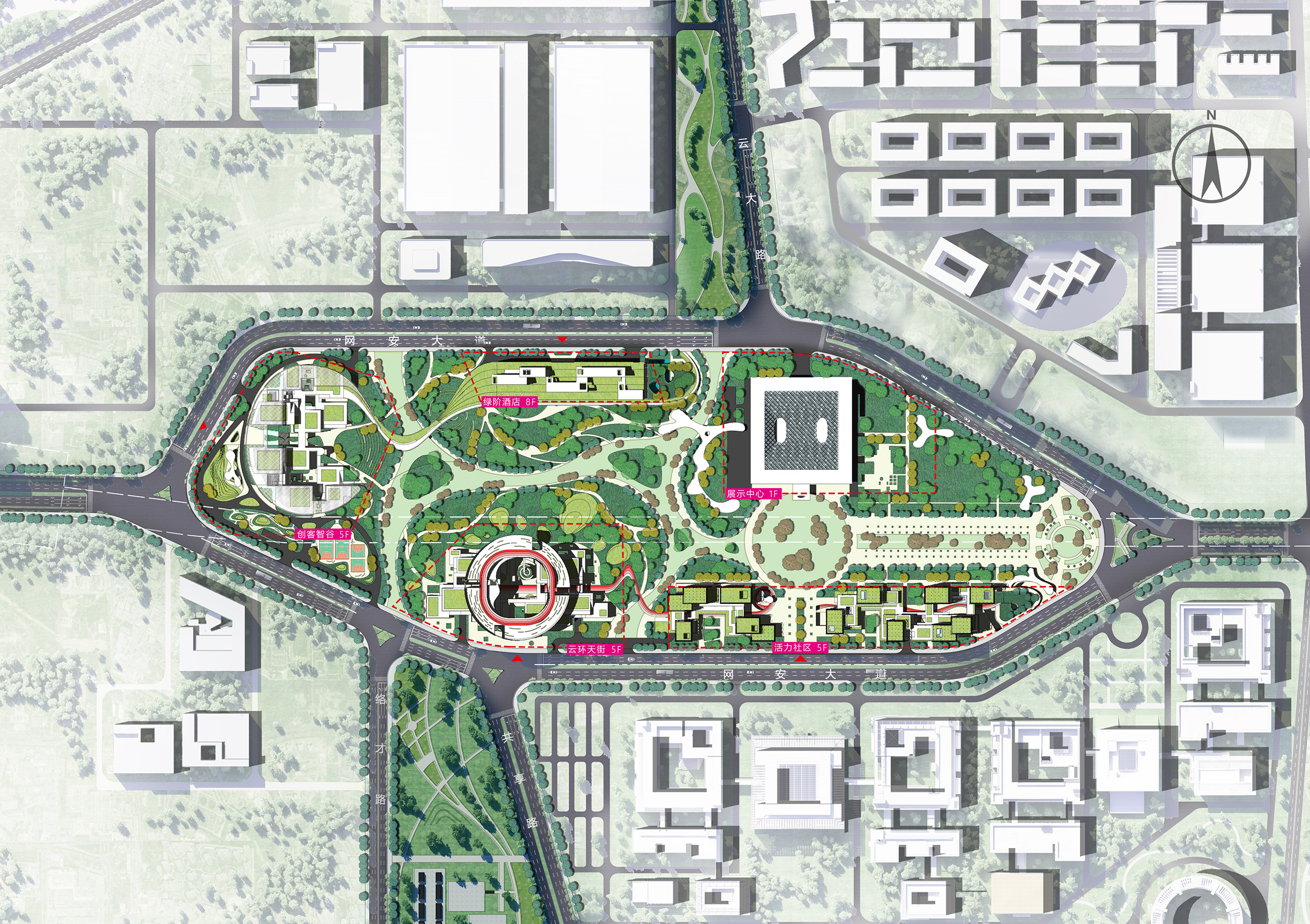
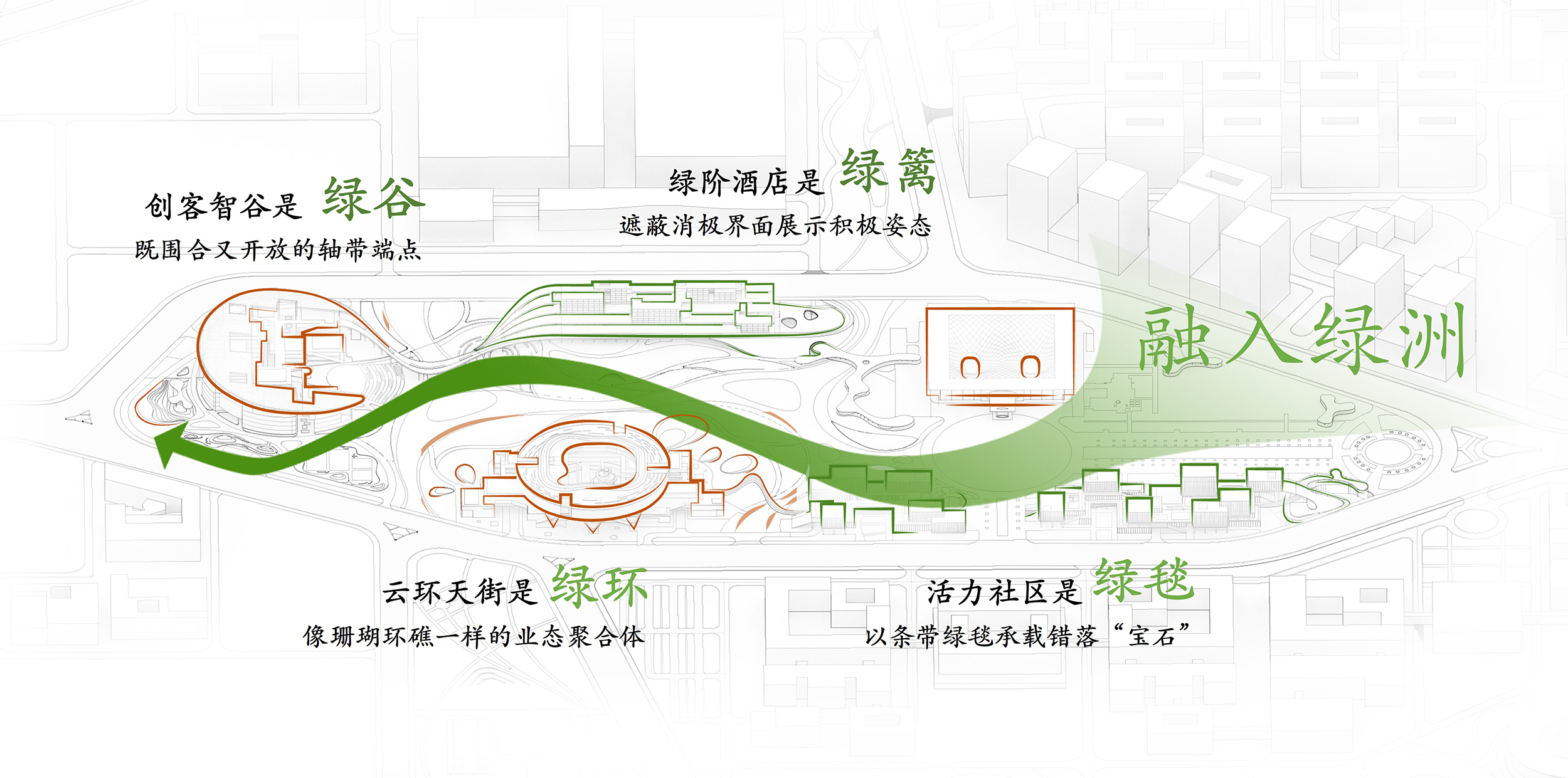
On the site plan, the new volumes voluntarily yield the middle. We pushed the buildings out to the east and the west, and we kept a continuous public band running through the centre. In the planning drawings we called it the landscape spine. Stripped of the rhetoric, the instruction was one sentence: let people walk all the way through.
We were not trying to dialogue with Phase I, and we were not trying to introduce a second character into the campus. Phase II’s first job is to catch: to catch the datum that is already set, to catch the public movement the city was beginning to expect, and to catch the next decade of the campus’s working life without making a fuss about any of it.
What we added
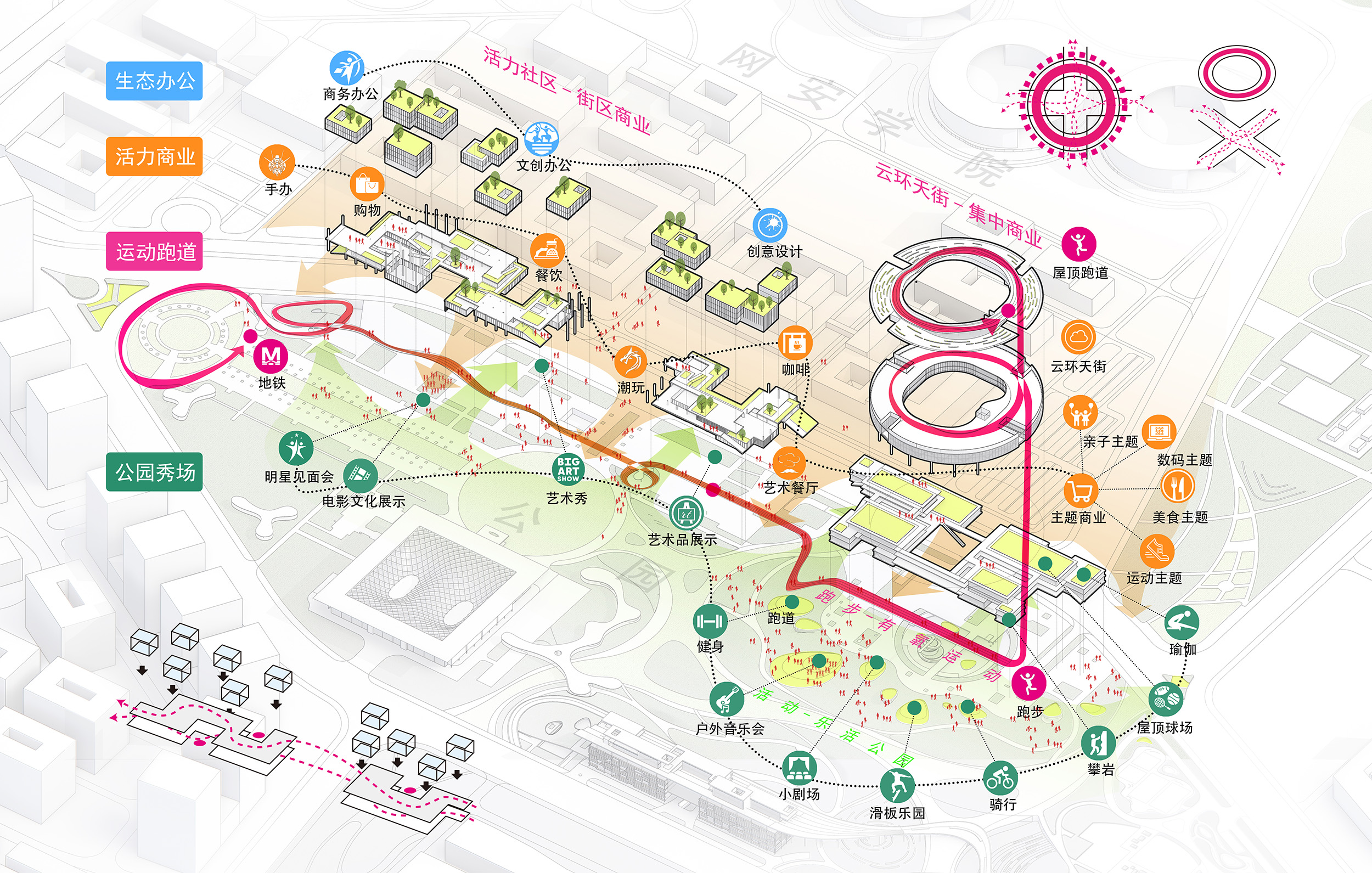
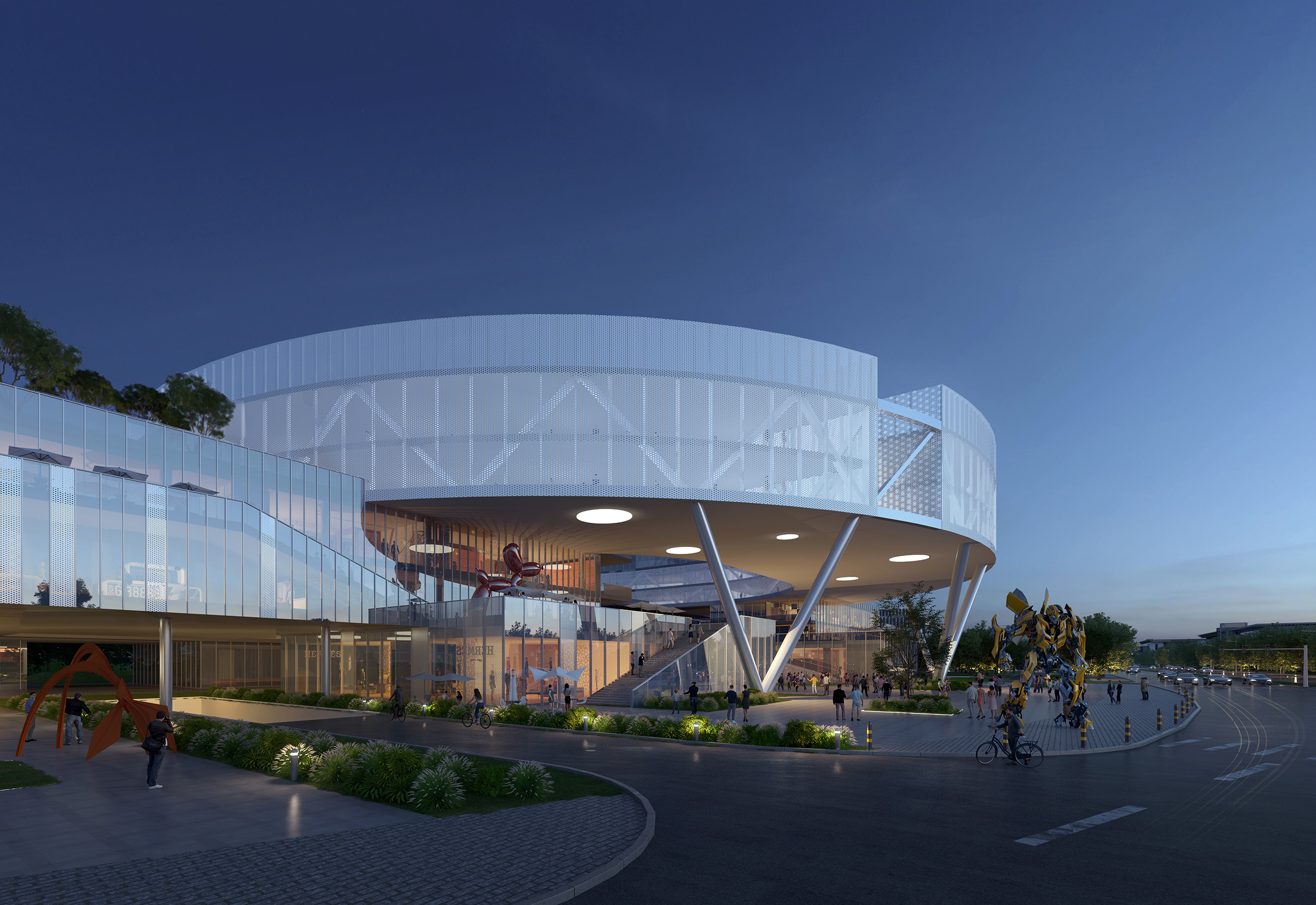
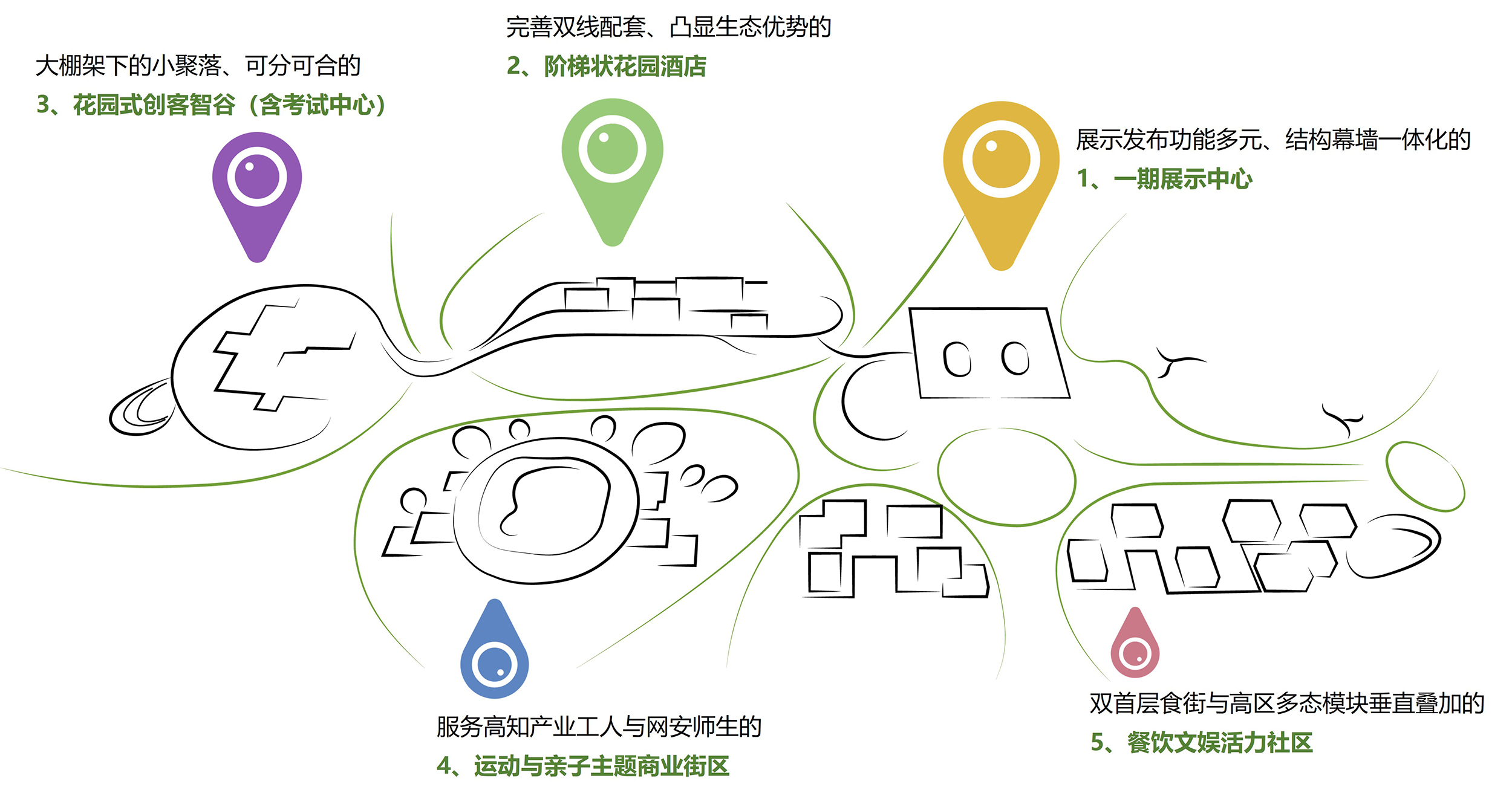
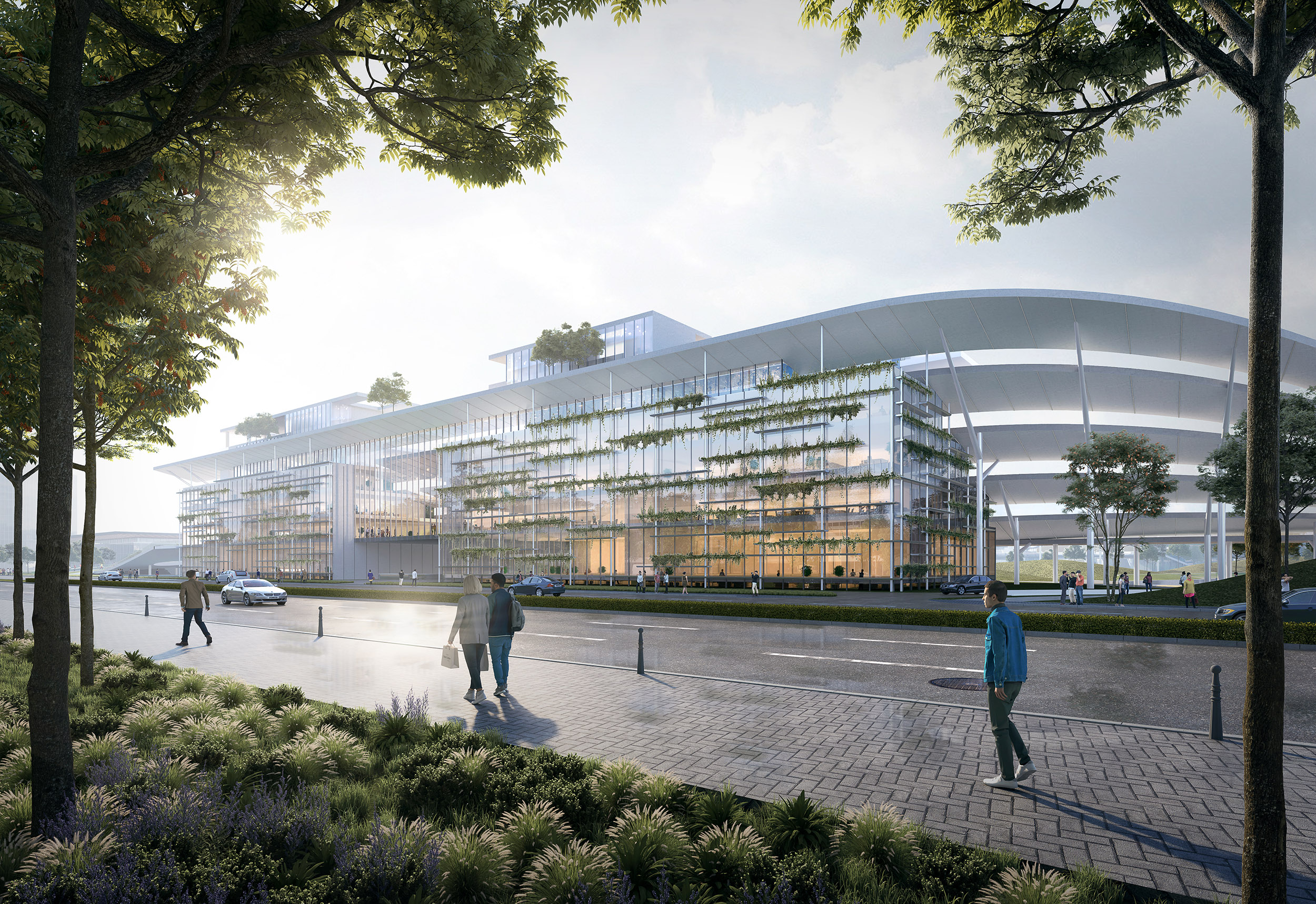
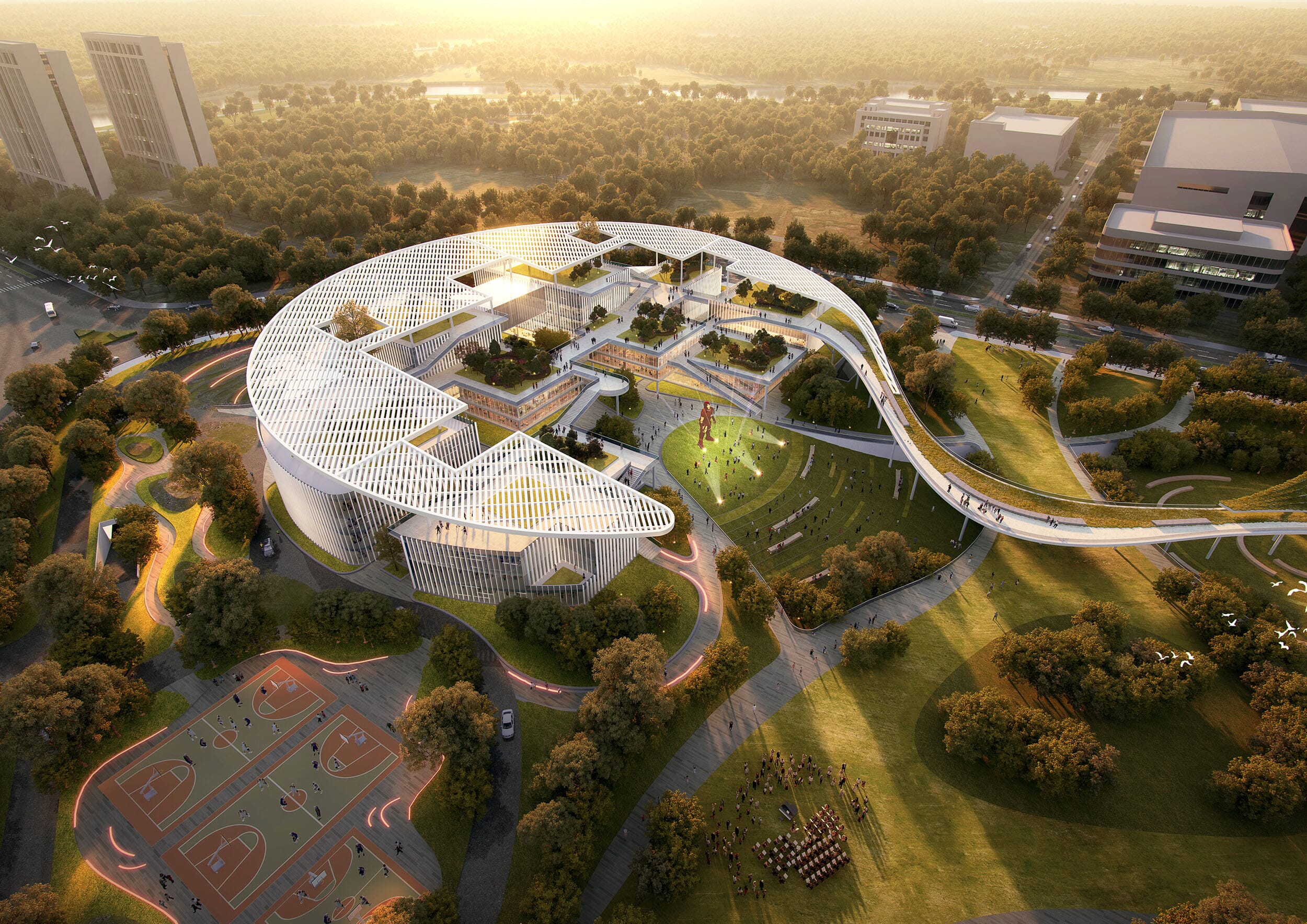
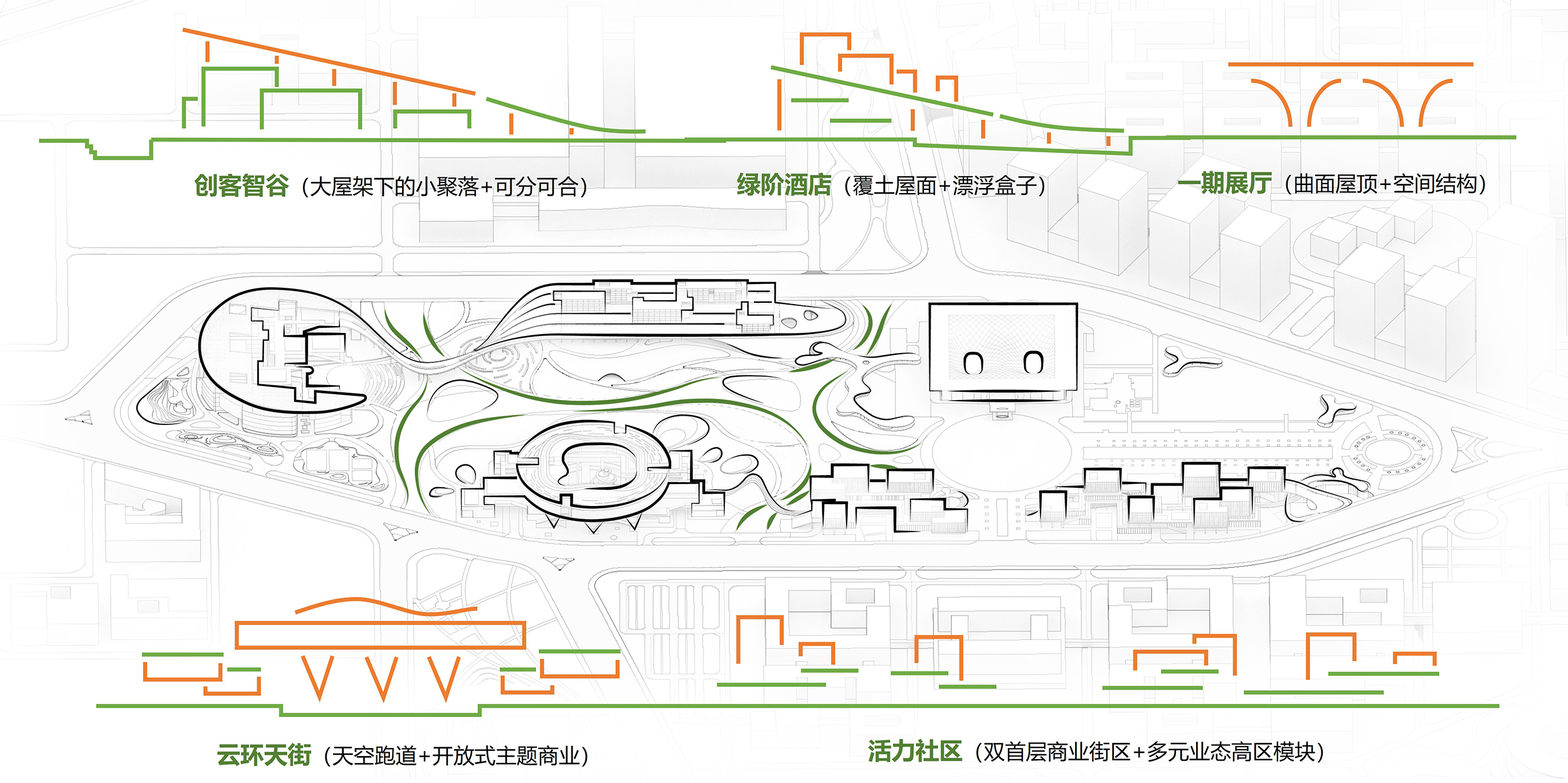
Five new volumes touch down: an examination centre, the Green Step Hotel, the Maker Valley, the Cloud Ring sky-street, and the Vital Community. Each carries a different kind of use, and each was deliberately brought down in height. We did not want any one of them to upstage the Phase I exhibition hall.
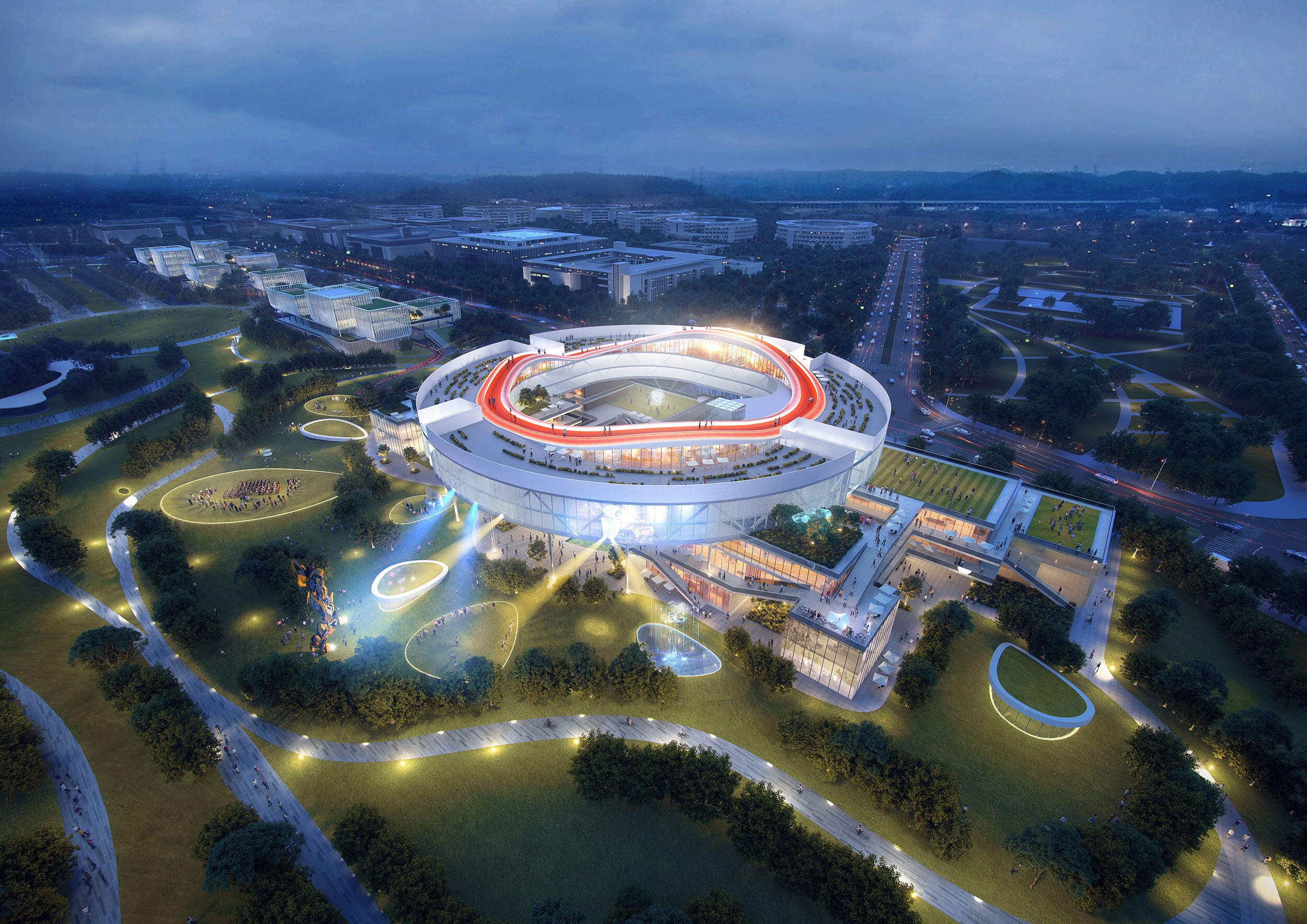
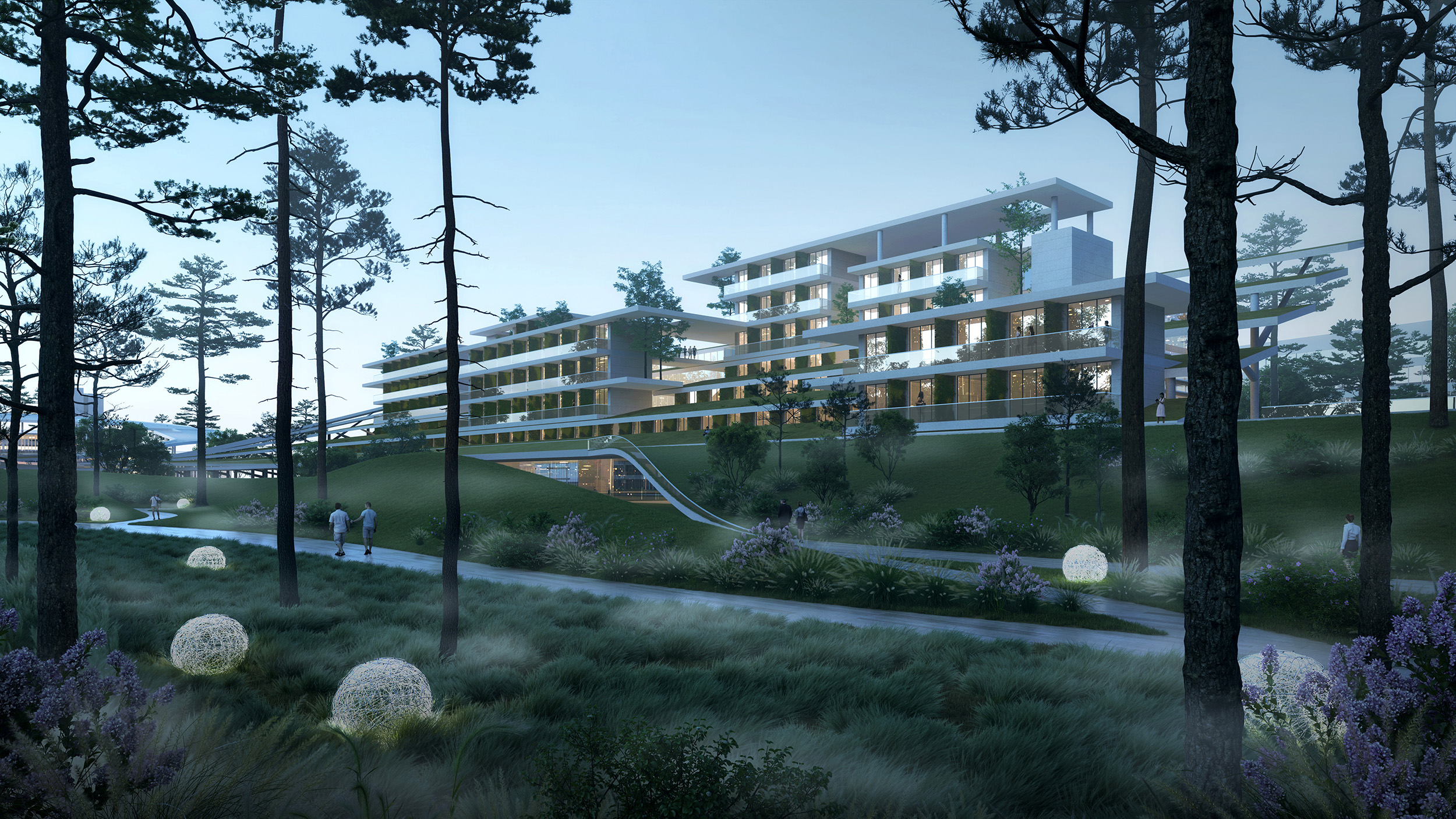
The examination centre is set into the ground, its roof handed back as a walkable landscape. The Green Step Hotel splits into a low wing and a high wing. The low wing sits close to the campus and serves the staff, students and examination crowd, while the high wing tucks behind the pines for business reception. The Maker Valley is a small settlement under a long shed-roof canopy: rooms can be partitioned or thrown open, leaving room for whatever the tenants decide to be later. The Cloud Ring sky-street threads above the commercial band, and the Vital Community gathers the southern edge into something close to a neighbourhood.
The decision running through all of them is the same. We chose to inherit a height limit rather than test one. Once the volumes were held back, the roofs, the slopes and the outdoor spaces in between were released. They stopped being leftovers and became part of the park itself.
There is a quiet setback at work. None of these new pieces tries to be the project’s image. The image, when we drew it, was always the spine and the ground around it; the buildings are what hold the ground. Looking back at the volumetrics now, what reassures us is how little ambition lives in the silhouette and how much of the design ended up in the section.
The public north-south axis
The central spine is not a single path. It is five gardens of different character strung in sequence: creative, ecological, leisure, shaded, and cultural. Each garden corresponds to the building face beside it; the roofs, the slopes, the plazas and the under-canopy spaces continue one into the next, so that walking from the Maker Valley at the north end to the Vital Community at the south reads as one public movement rather than five episodes.
The running track and the Cloud Ring sky-street unfold along either side of the axis. Their constituency is the people who actually stay in the campus on ordinary days: the staff and students, the industrial workers, the candidates passing through for examinations. The spine is sized for them, not for the visiting eye.
Most of the time, infrastructure work is making one quiet connection on behalf of the city. Phase I had already set the campus’s character; Phase II’s job was to complete this north-south public band without notice, and then step aside. We left the spine continuous, we left the heights consistent with what came before, and we left the centre to the people who would use it.
Looking back at the drawings from this stage, what reassures us is exactly that. We did not contend, we did not add an extra gesture, and once the right position, the right height and the right yield had been arranged, most of the work was already done. The campus carries on, and the new pieces sit inside it as if they had always been there.