Jiangxia Star
江夏之星
Jiangxia's sub-district was waiting for a restrained kind of landmark: not another high-rise, but a recognisable, quiet civic anchor. We gave height to the tower and breadth to the ground. A horizontal public platform meets the surrounding traffic, and the tower rises naturally from it without competition. The Jiangxia Star is not meant to be the brightest. It is meant to be the steadiest.
- Year
- 2022
- Location
- Wuhan, Hubei
- Typology
- Mixed-use / civic
- Status
- schematic
Site
The water surface of Hongqi Reservoir lifts this parcel gently away from the city. On one side, the growing edge of Jiangxia’s sub-district presses outward; on the other, a thin ecological seam left behind by the hills and the water. We did not rush to answer the word landmark. It is too easily read as height, too easily read as a tower stealing the scene. We read the site first: where the water comes from, where the roads enter, on which stretch the silhouette of the distant mountains breaks, and on which stretch it picks back up again. Then we read the neighbours: an education and research cluster to the north, a sports and leisure cluster to the east. This star did not need to outshine them; it needed to hold the quiet middle steady.
We also read those clauses in the brief that habit calls problems: phasing limits, height caps, three-sided setbacks. Each of them, turned over, read as a clue rather than a constraint. Read this way, they helped us settle the breathing rhythm of the site itself: where to compress, where to release, where to leave the ground simply alone. The reservoir, the neighbouring clusters, the soft seam between mountain and water, none of these wanted a contender. They wanted a coordinate, set quietly enough that everything around it could keep speaking.
Platform
The two schemes are two grammars of restraint, but the base is the same idea: give breadth back to the ground, let a single horizontal public platform stand first, and only then talk about anything else.
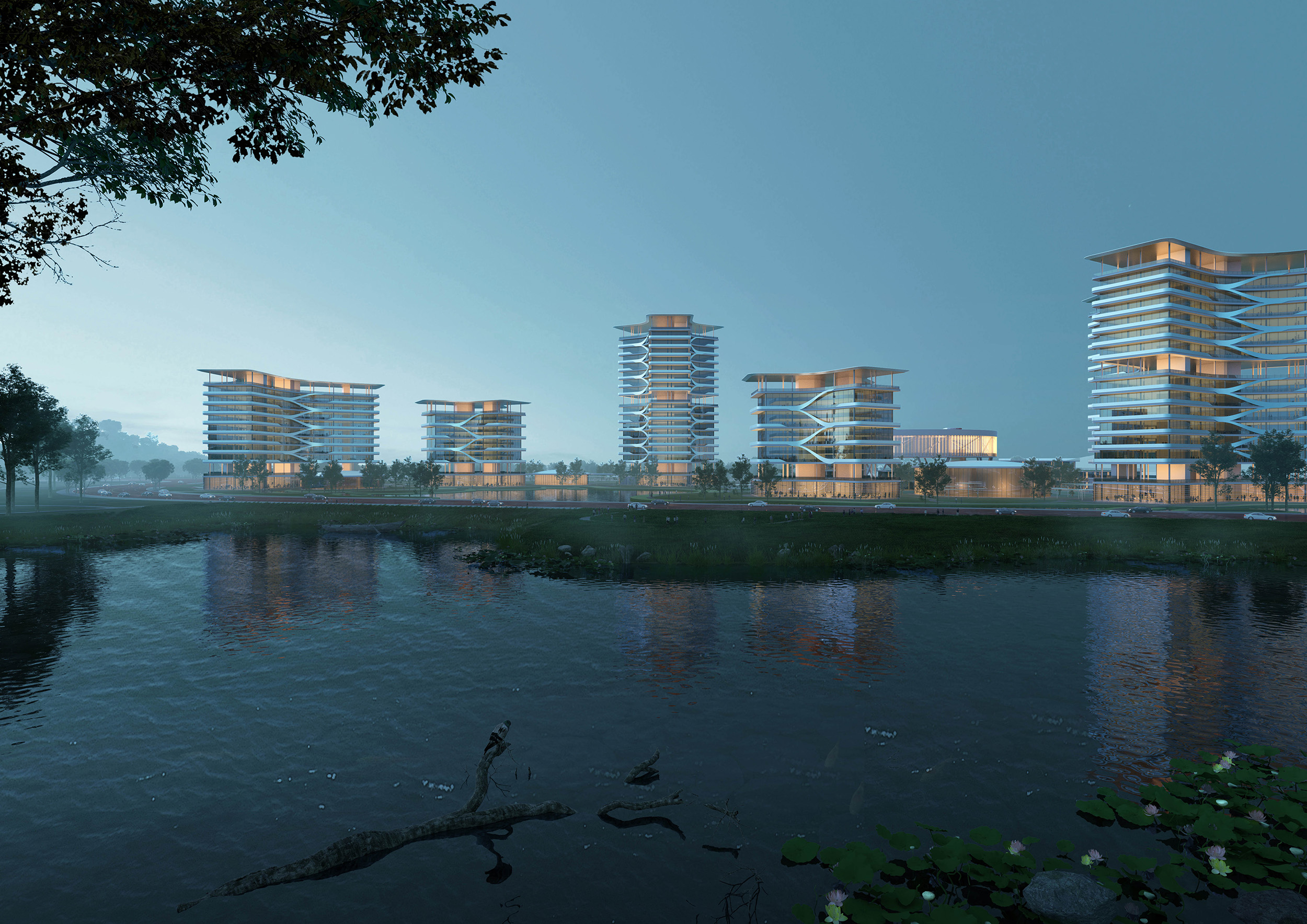
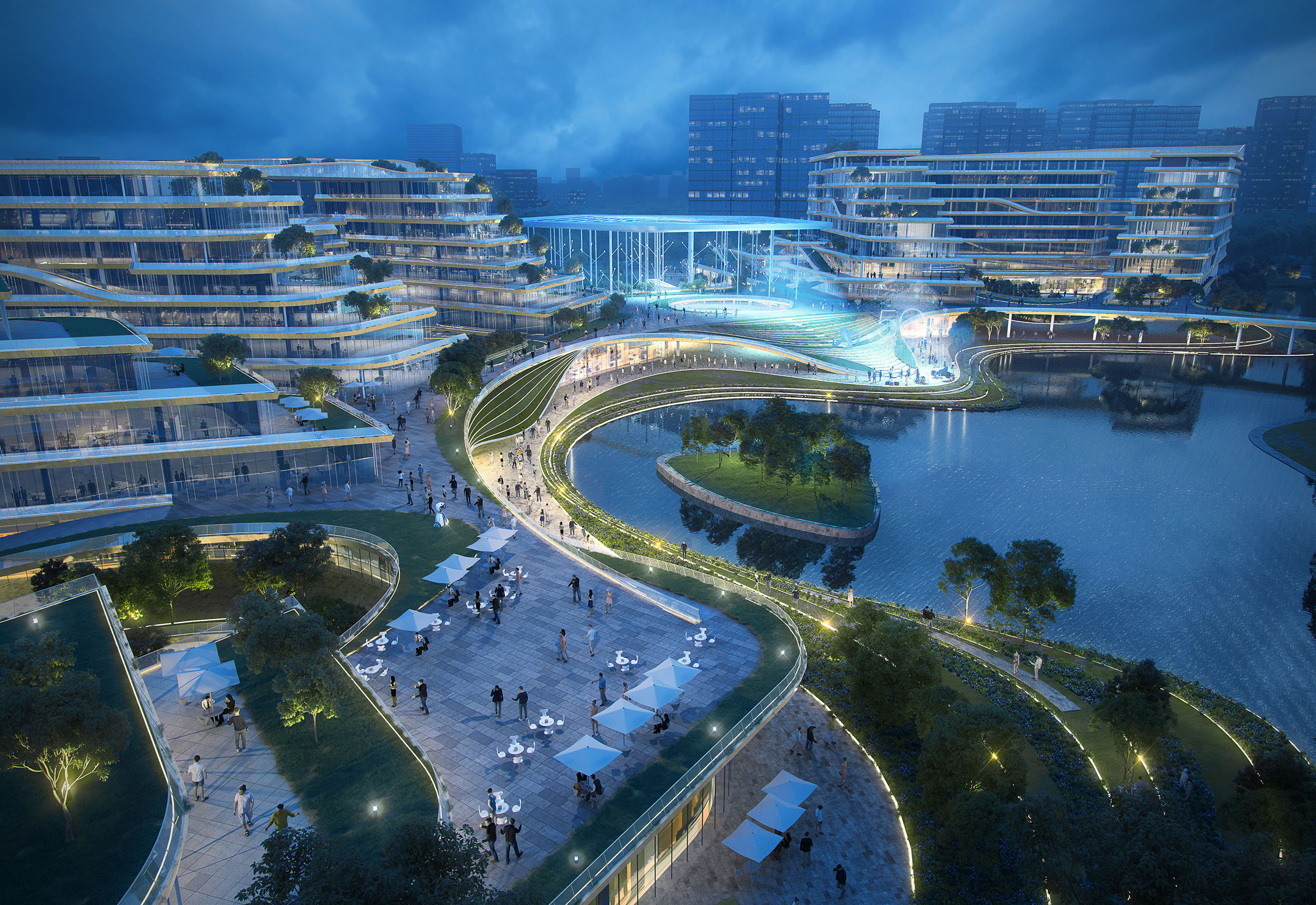
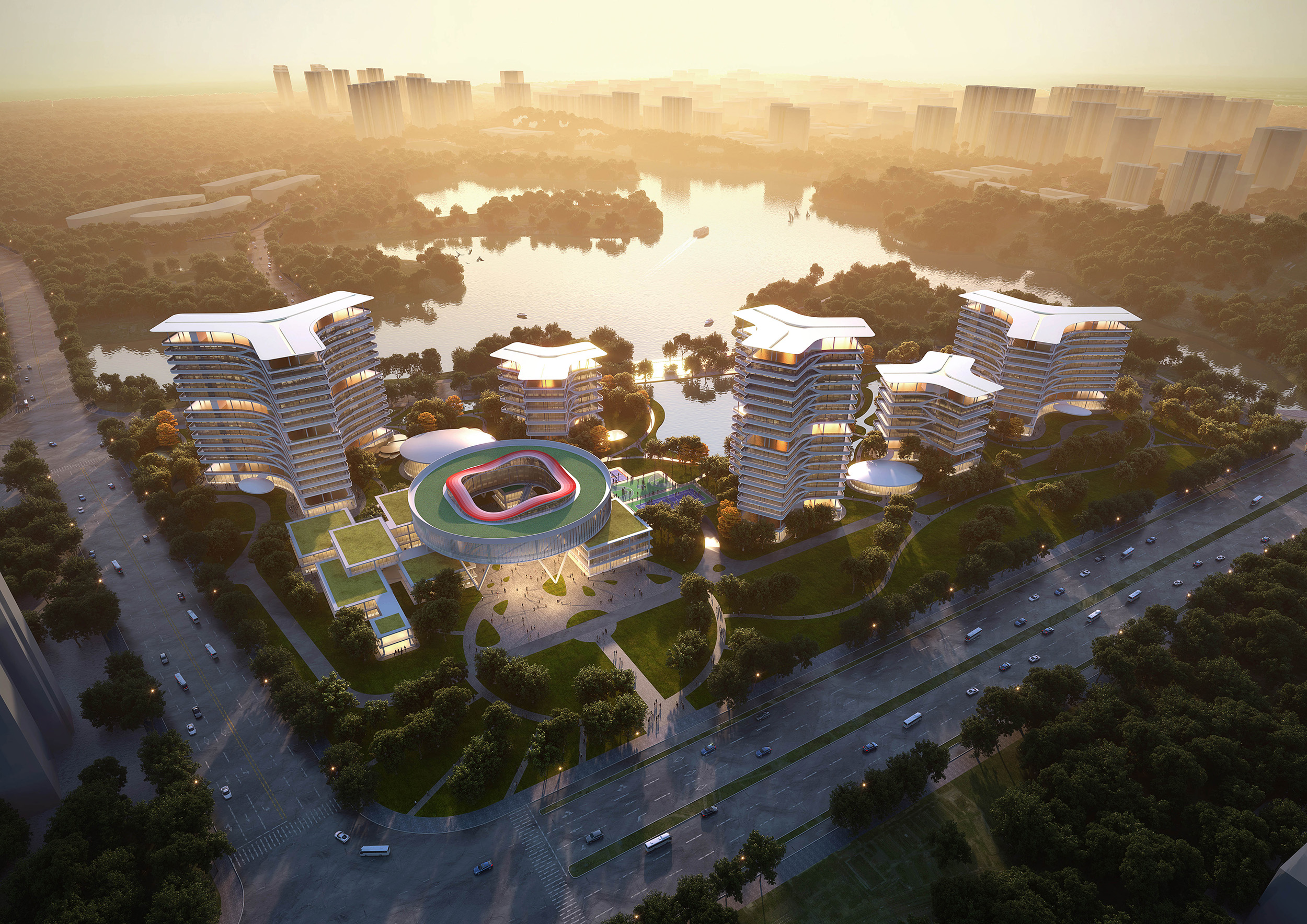
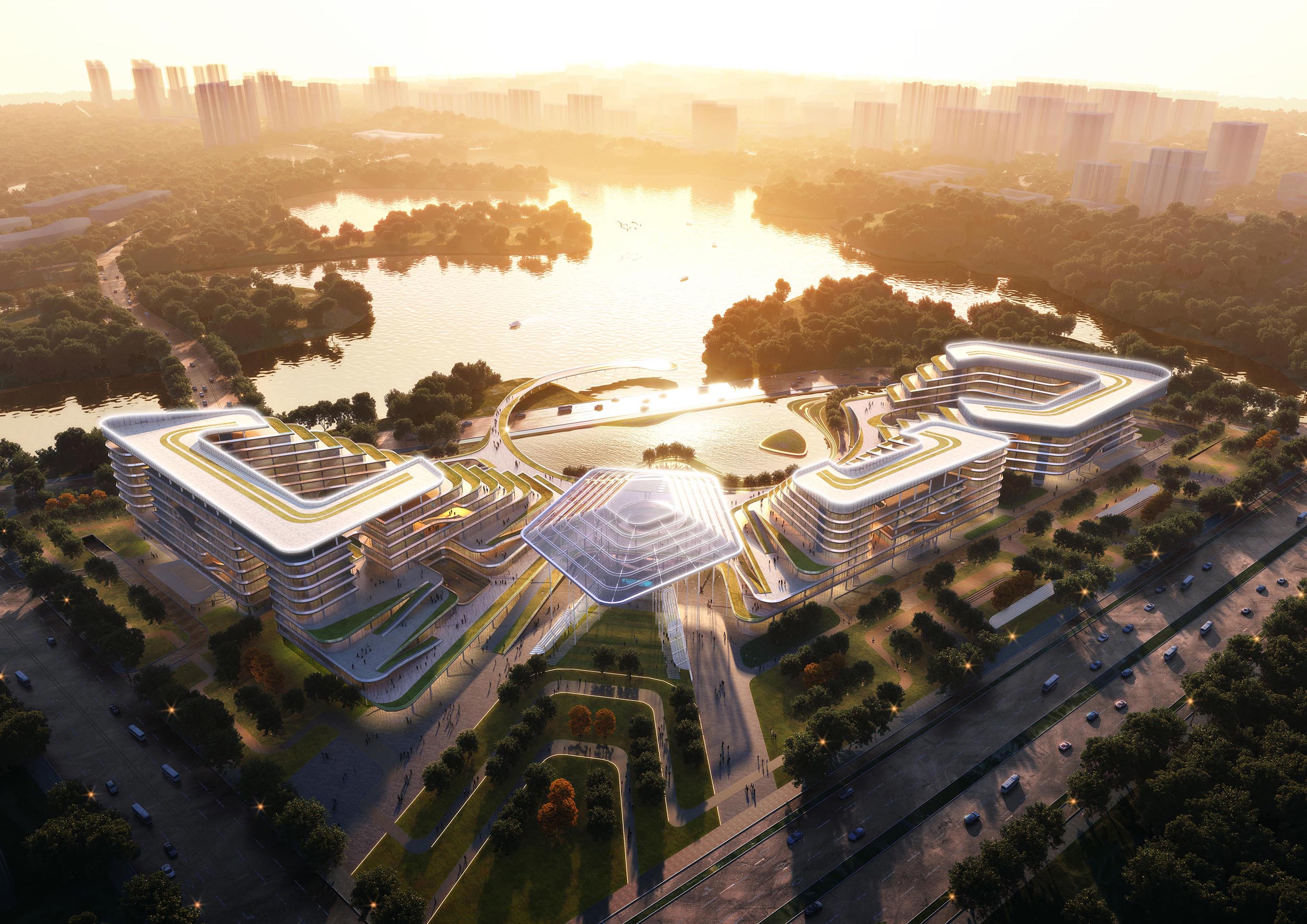
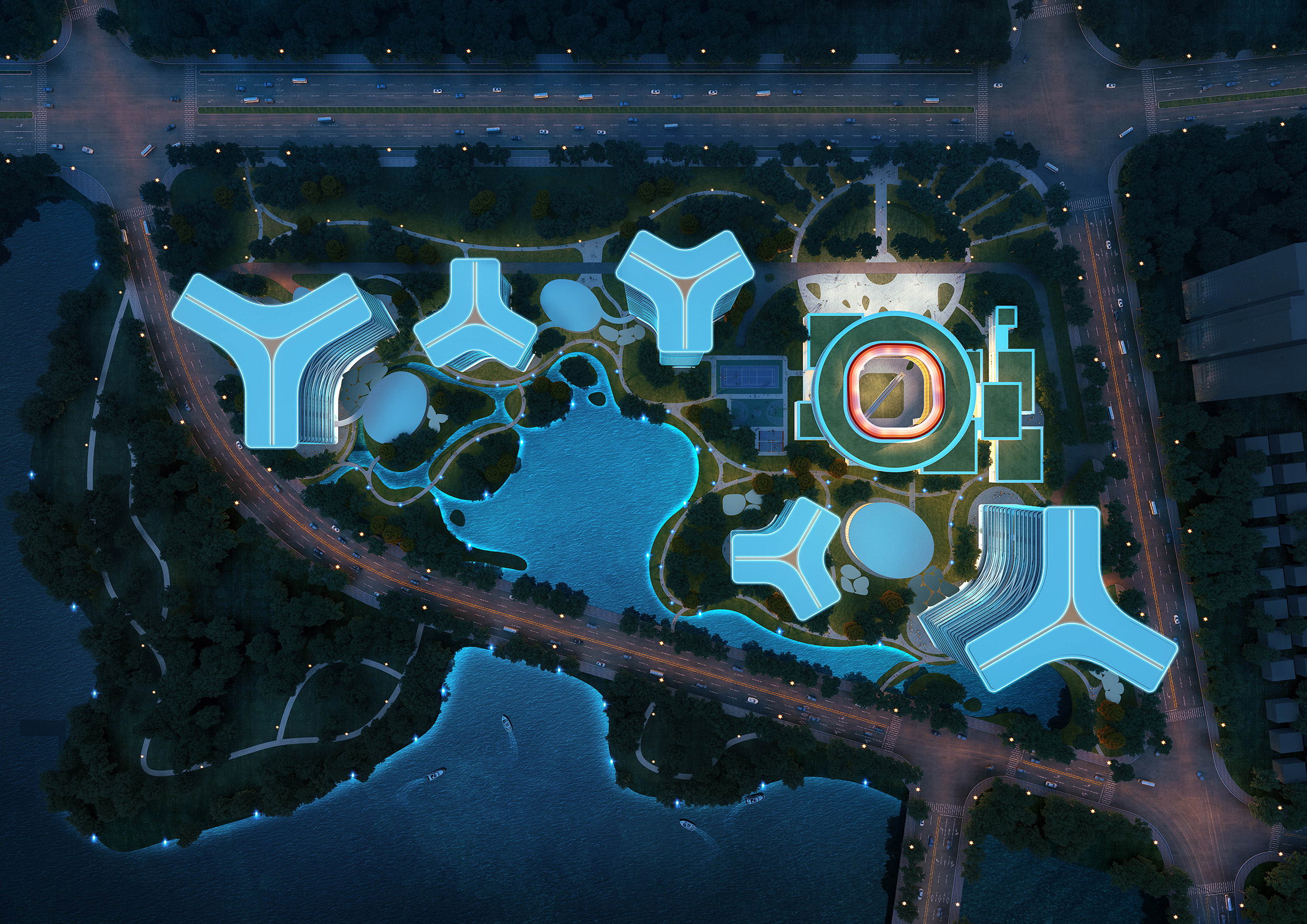
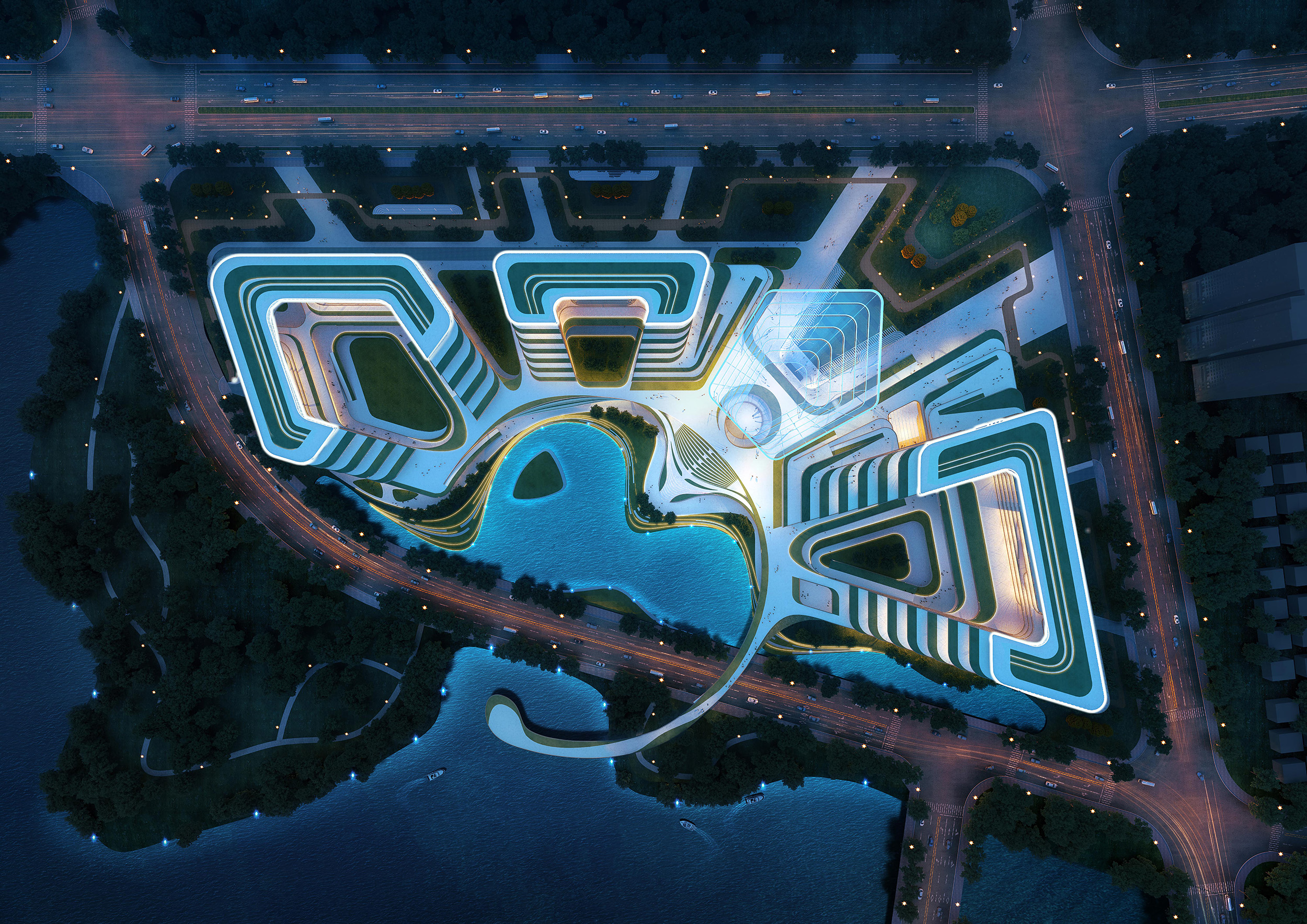
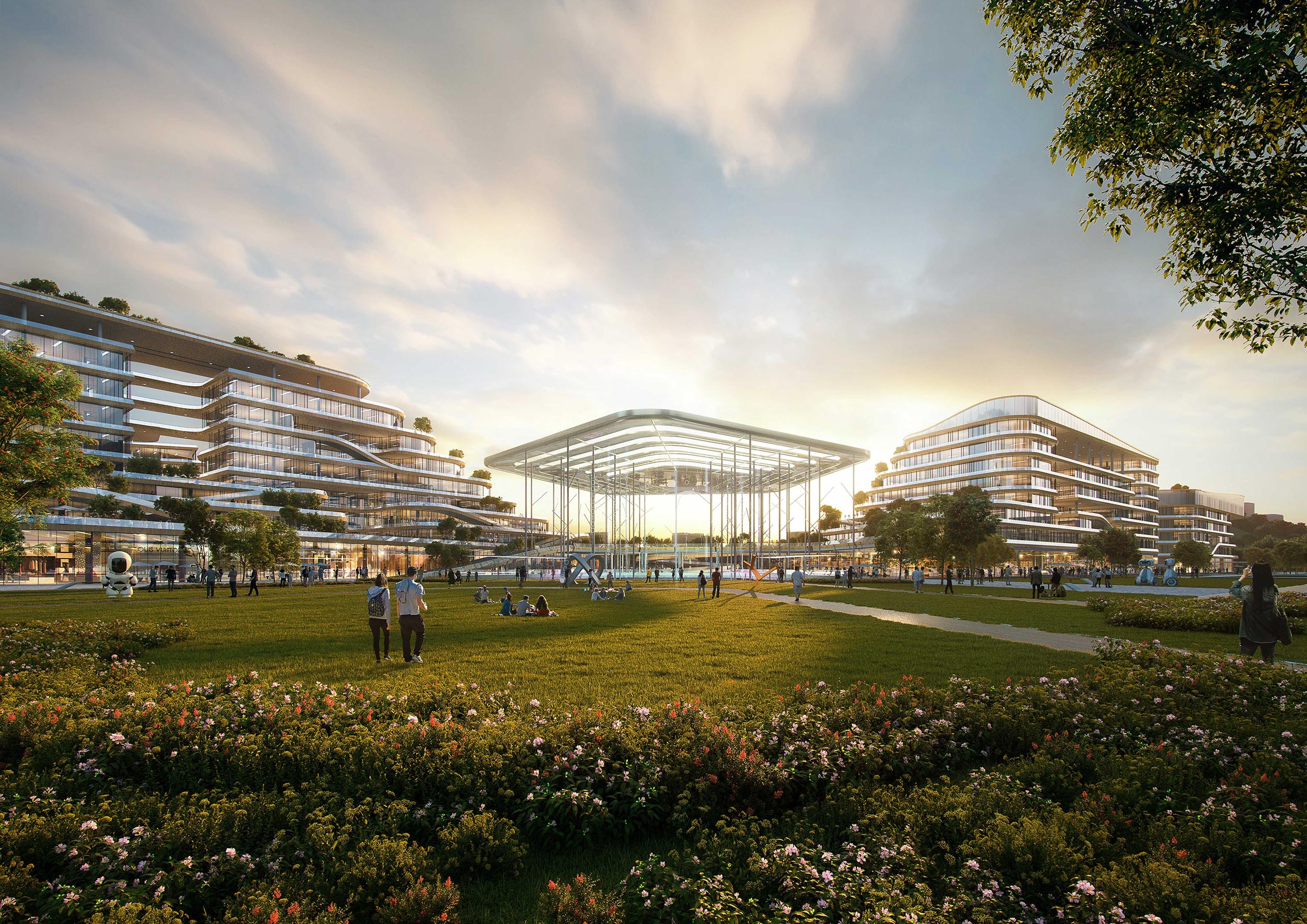
The first scheme breaks the hotel, expert apartments and talent housing into several short Y-shaped arms, scattered along the water. Each tower opens on three sides, none blocking another, so that wind, sightlines and people can pass between them. A sunken ring at the centre carries what we call the peri-hotel programme: exhibition, conference, dining, the layer that actually presses against people, the layer where the community can pause during the day. The second scheme goes further. It lowers the high tower outright, letting the building step down in terraces around the central pool, like a generous roof folded gently into a park. Roofs link to roofs, platforms link to platforms; one can walk in from the city side and continue down to the water without interruption, and the connecting galleries are themselves the public space.
The two languages differ, but the destination is the same: yield the noise to the ground, return the quiet to the water. The platform is not a podium asked to support a hero above it; it is a piece of city the project owes back to its neighbours, and the rest is built only after that debt is paid.
Tower
In the first scheme the tower is deliberately held in. The Y-shaped short arms give every unit three open faces (the lake, the hills, the distant skyline of the city), but the tower as a whole refuses to compete for the highest point. It rises from the platform without effort, like a small set of punctuation marks lifted by a watercourse, marking the place quietly rather than declaring it. In the second scheme the idea of the tower is handed back to the horizontal entirely: no high tower at all, only terraces and connecting galleries that follow the breath of the site, where building and landscape thread into a single thing.
Neither version is trying to make a silhouette that can be read from far away. Each is trying to find the right density and rhythm for one stretch of waterfront. We kept returning to the same line: Jiangxia’s star should not be the brightest, but the steadiest. Steady, here, does not mean steady in mass. It means steady in the long conversation between this building and the reservoir, between this building and its neighbours, between this building and the industrial community that will slowly arrive around it. A coordinate that does not insist on being noticed all at once, but that can be remembered, slowly, over time.