Optics Valley Exhibition Center
光谷展示中心
Optics Valley's urban grain is still growing. Metro, parks, housing, each speaks its own language, and a public pause is missing. The exhibition centre is meant to be a city's living room. We proposed two schemes: one outward-facing, with a continuous horizontal volume along the street and the interior exposed to passers-by; one inward, with a courtyard that gathers daily use and a single window left for the passing eye. Two postures, one question: what kind of living room does Optics Valley need?
- Year
- 2022
- Location
- Wuhan, Hubei
- Typology
- Civic / cultural
- Status
- schematic
Site
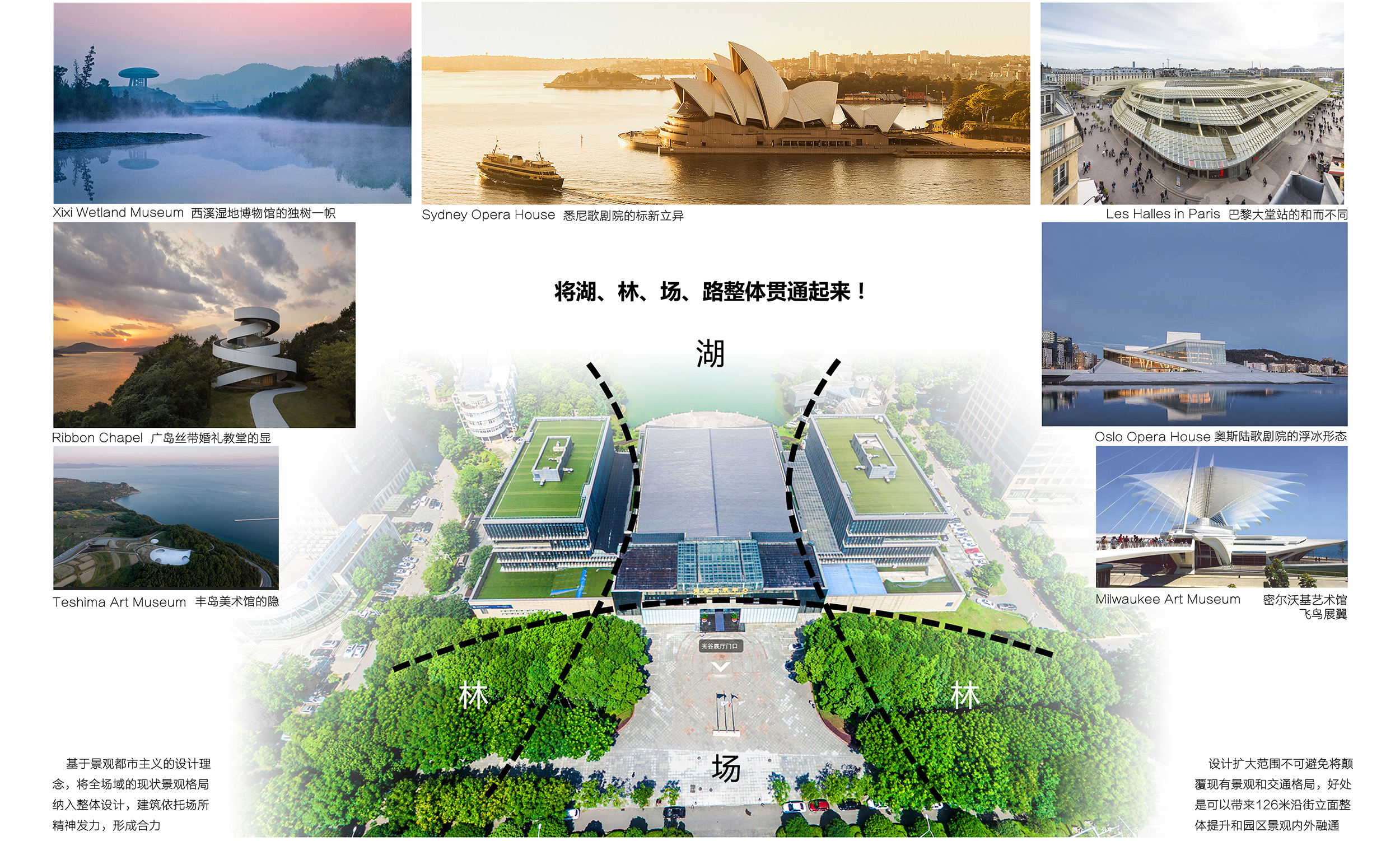
When we first stood on the parcel, we put the impulse to build aside. To the north, a lake was still growing into itself, separated from the site by a slice of city that had not yet taken shape; to the south, parks, research institutes and new housing each spoke at their own scale, with almost no public pause between them. The Optics Valley Exhibition Centre was held in the middle of all this, neither an extension of the lake nor a footnote to the street. It needed first to catch these scattered languages, and only then to begin saying anything of its own.
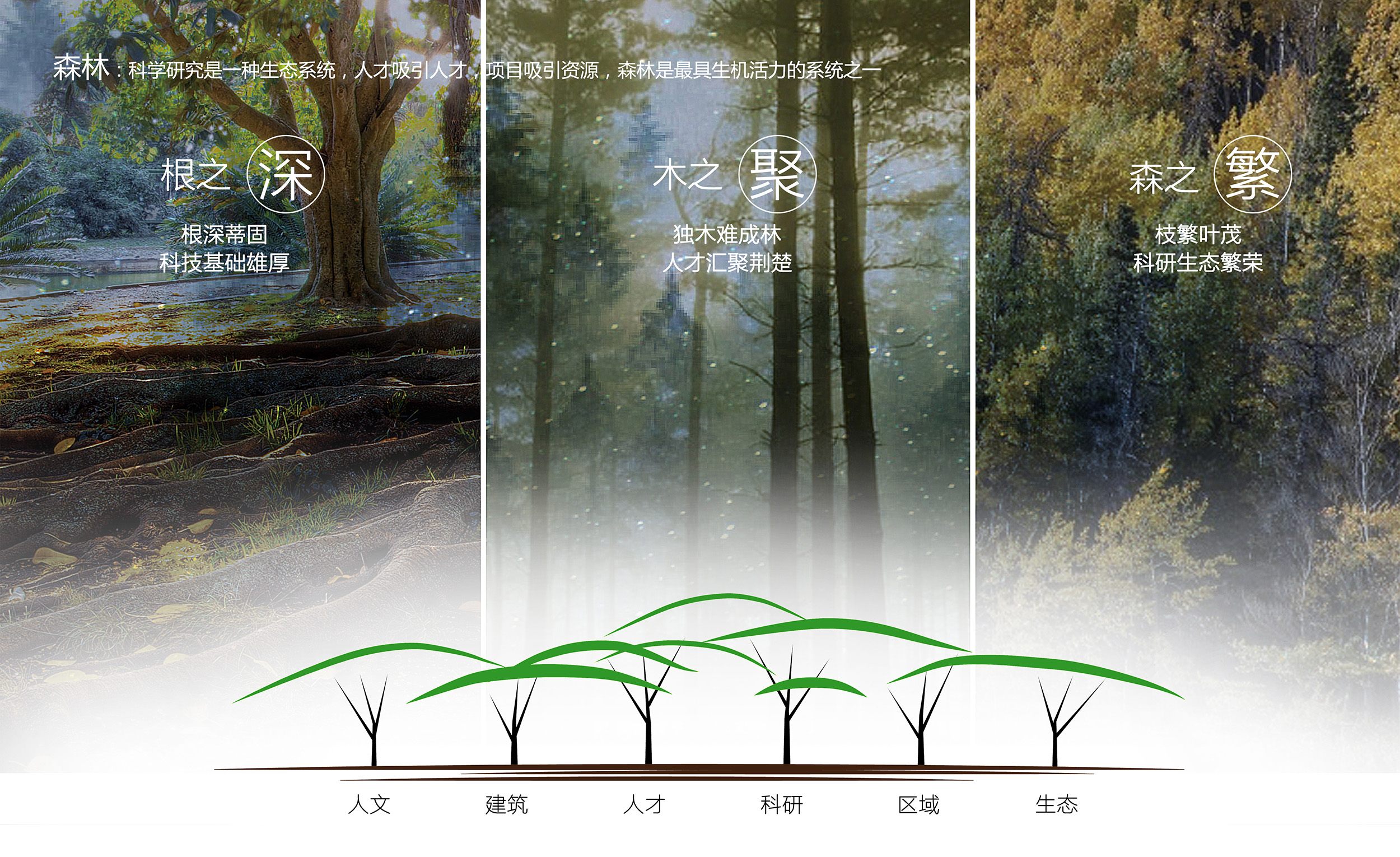
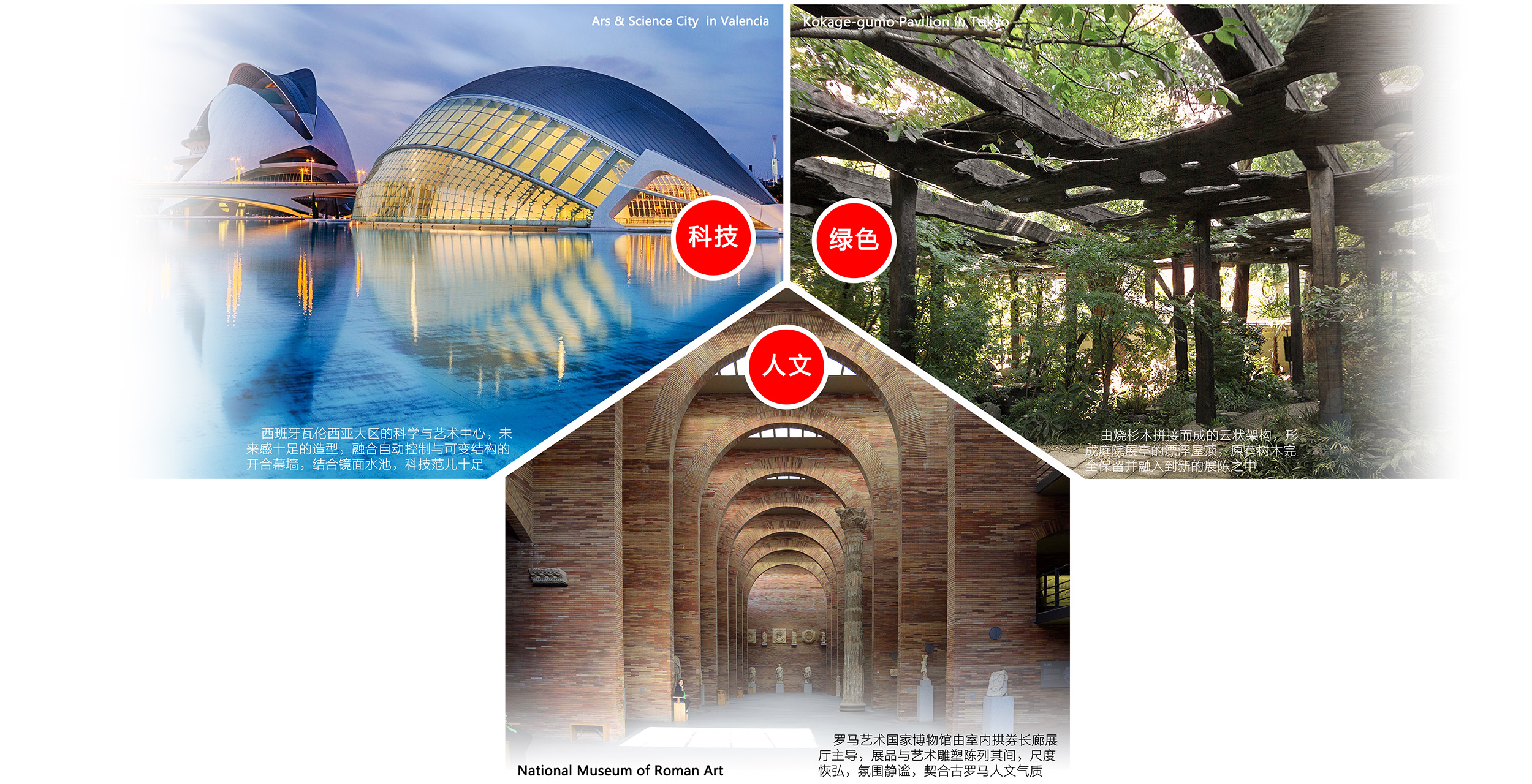
We read a few references: the quiet museums that sit beside water, the public eaves that stretch through cities, the walkways threaded by tree shadow. What they shared was not eloquence but a willingness to lower themselves by half a level, letting lake, grove and field rejoin into a single sentence. That gave us a common starting point: the centre did not need to prove itself first. It needed first to become a vessel.
Around this site we proposed two schemes. They were not laid out as option A versus option B but as a conversation between two postures, one outward, one inward, answering different sides of the same question.
Scheme A: Outward
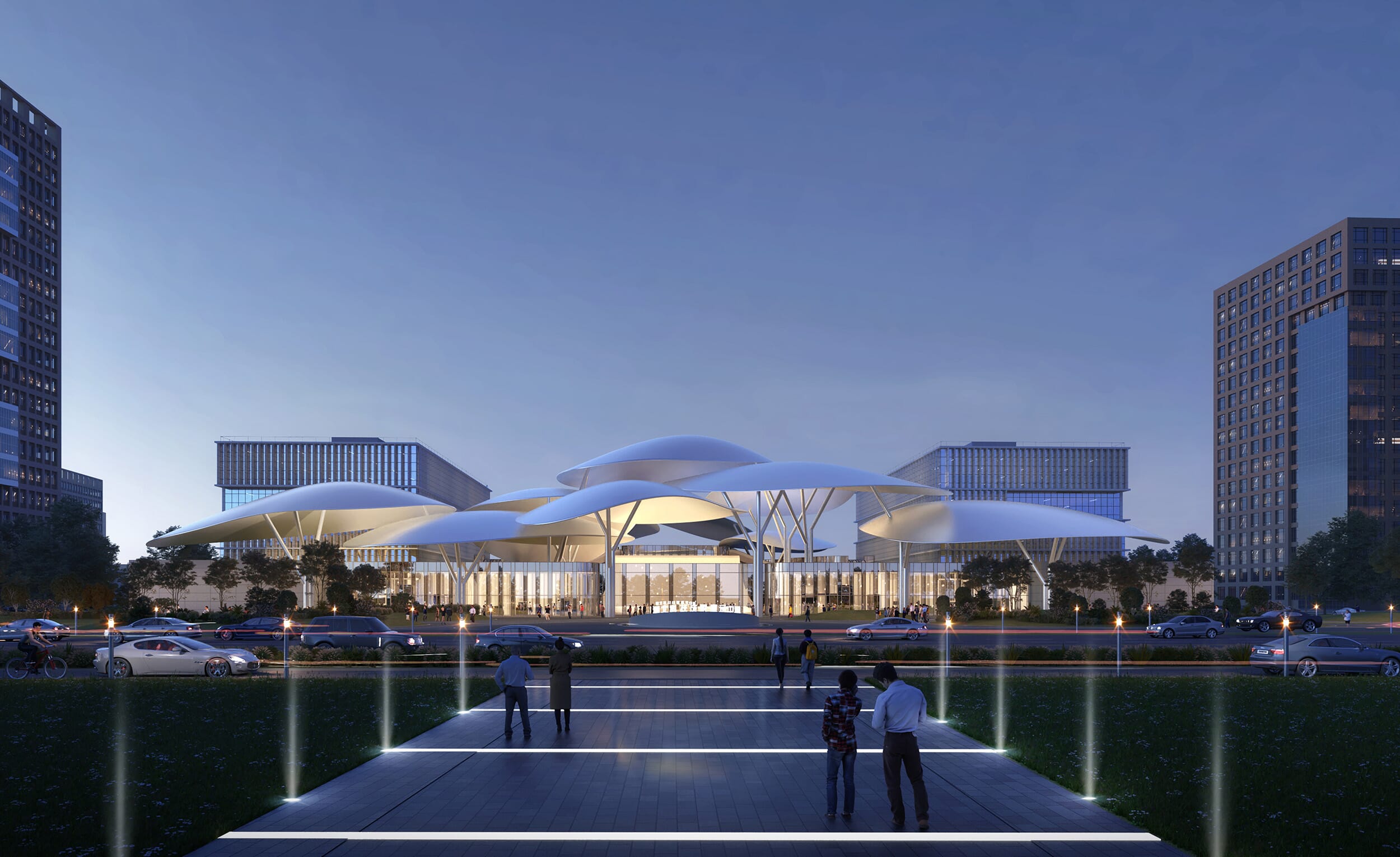
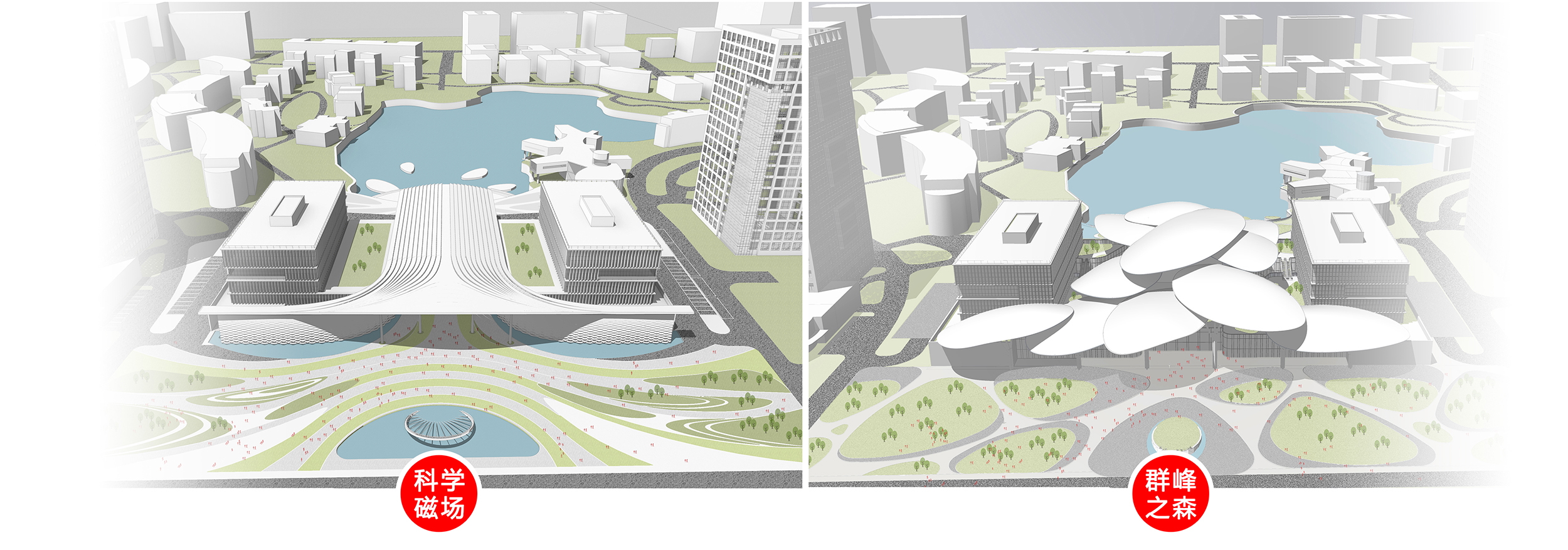
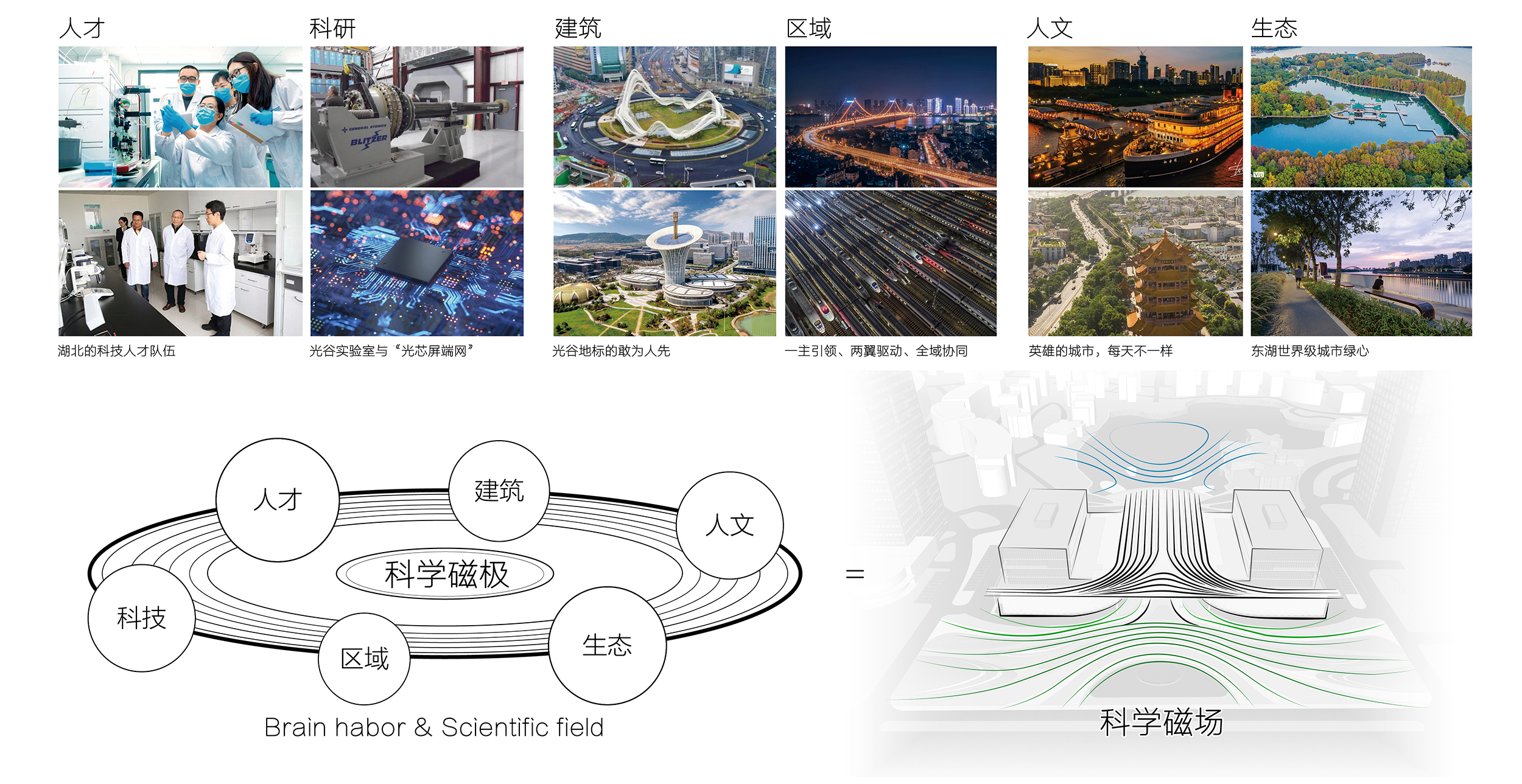
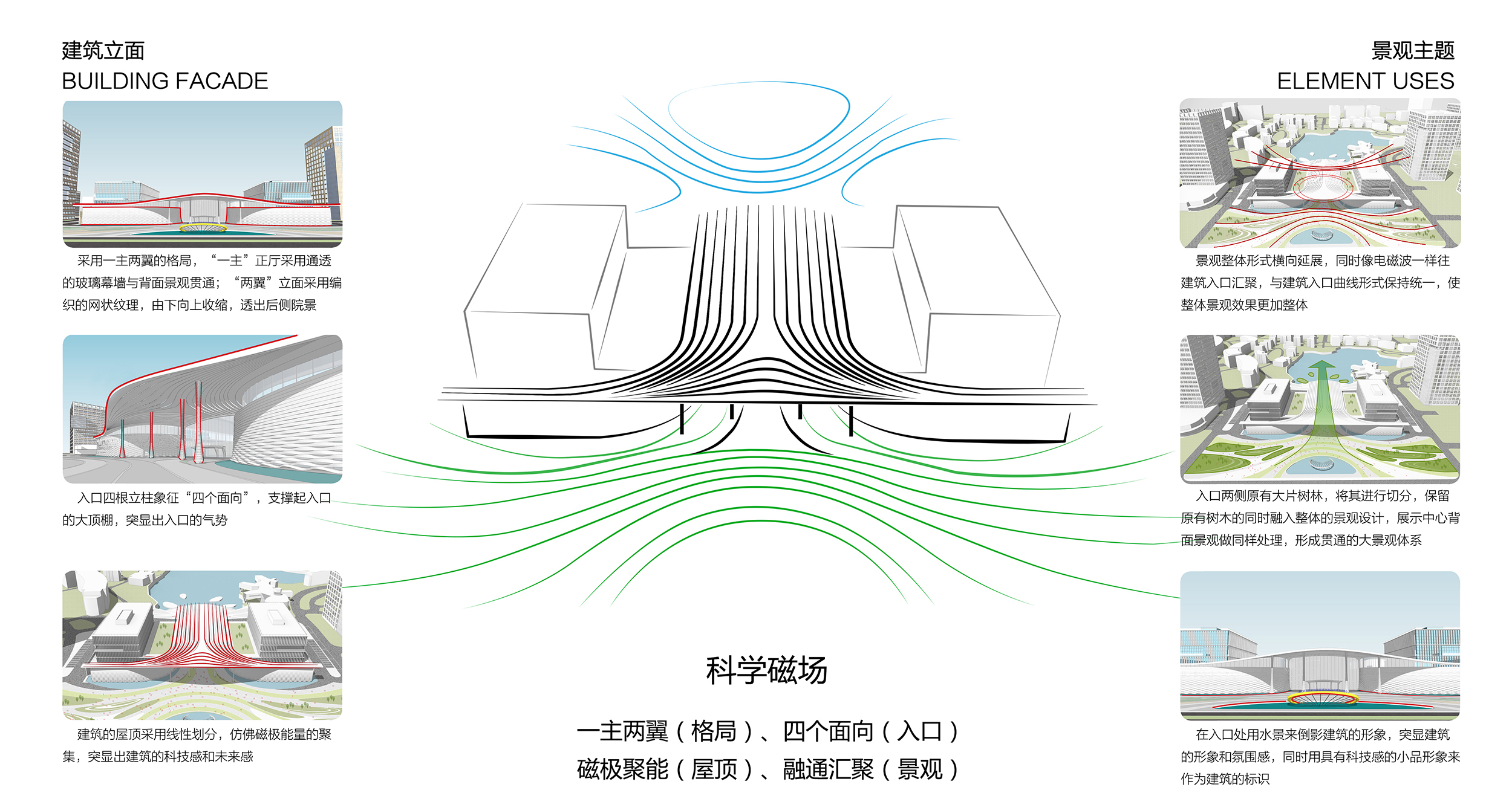
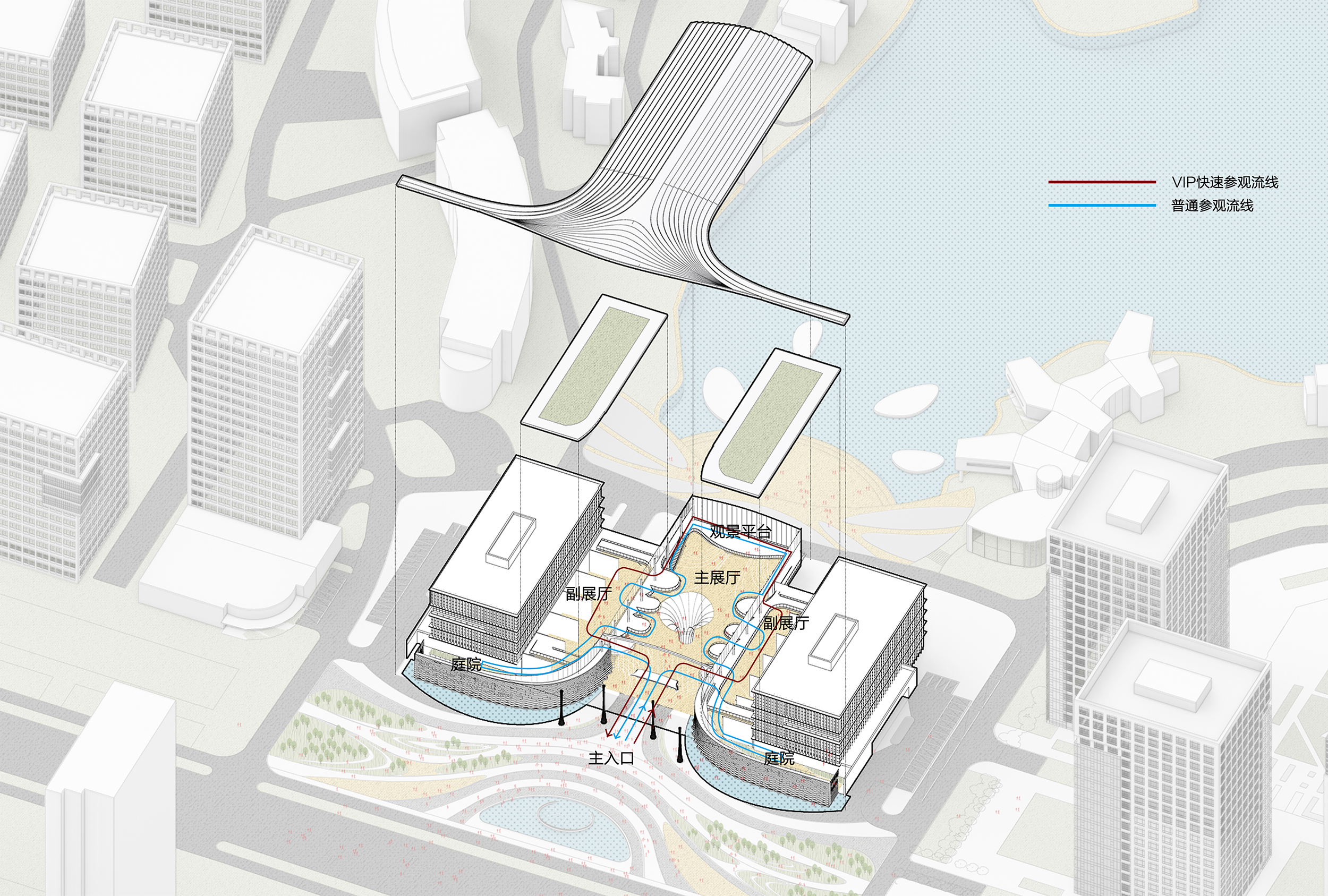
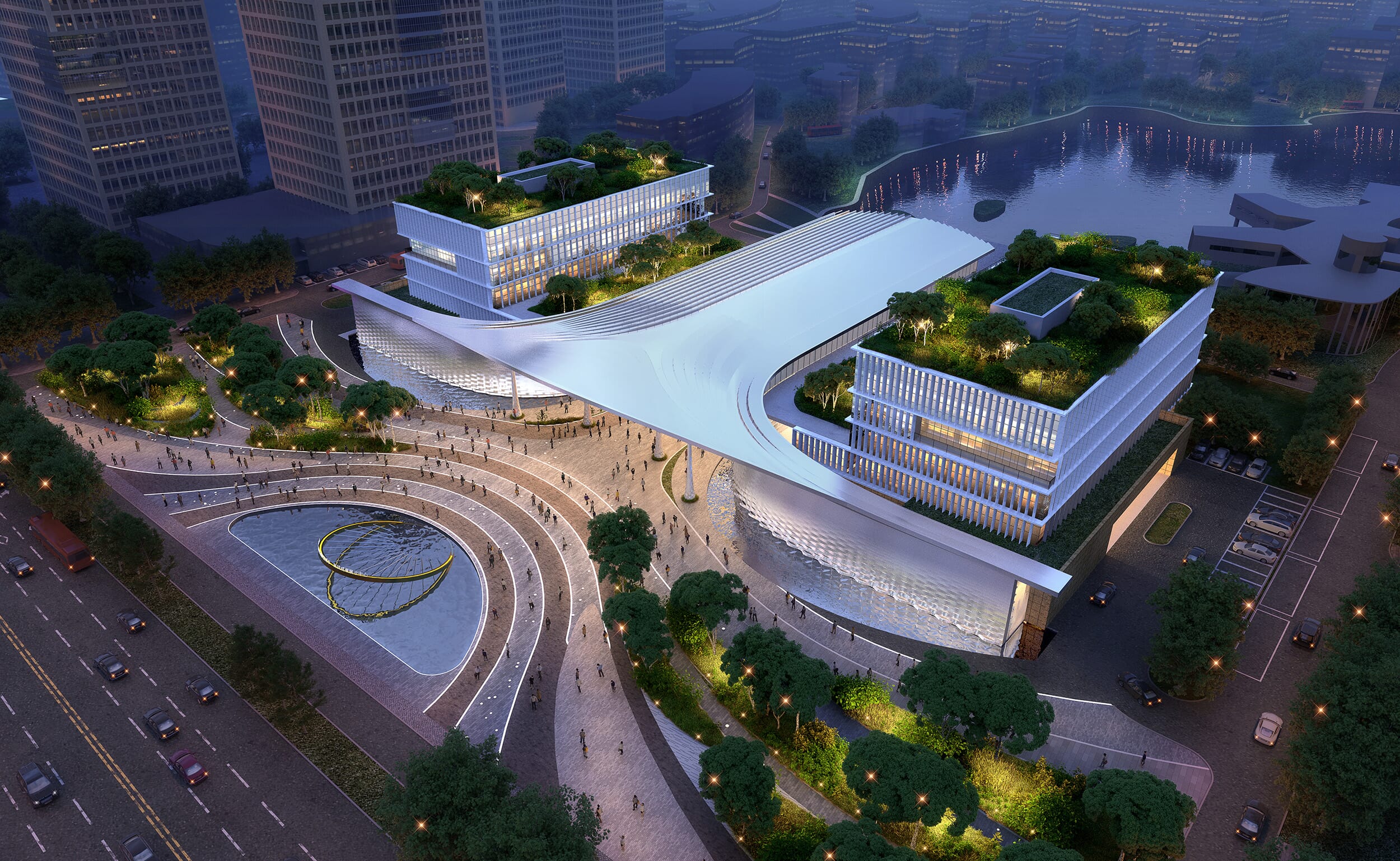
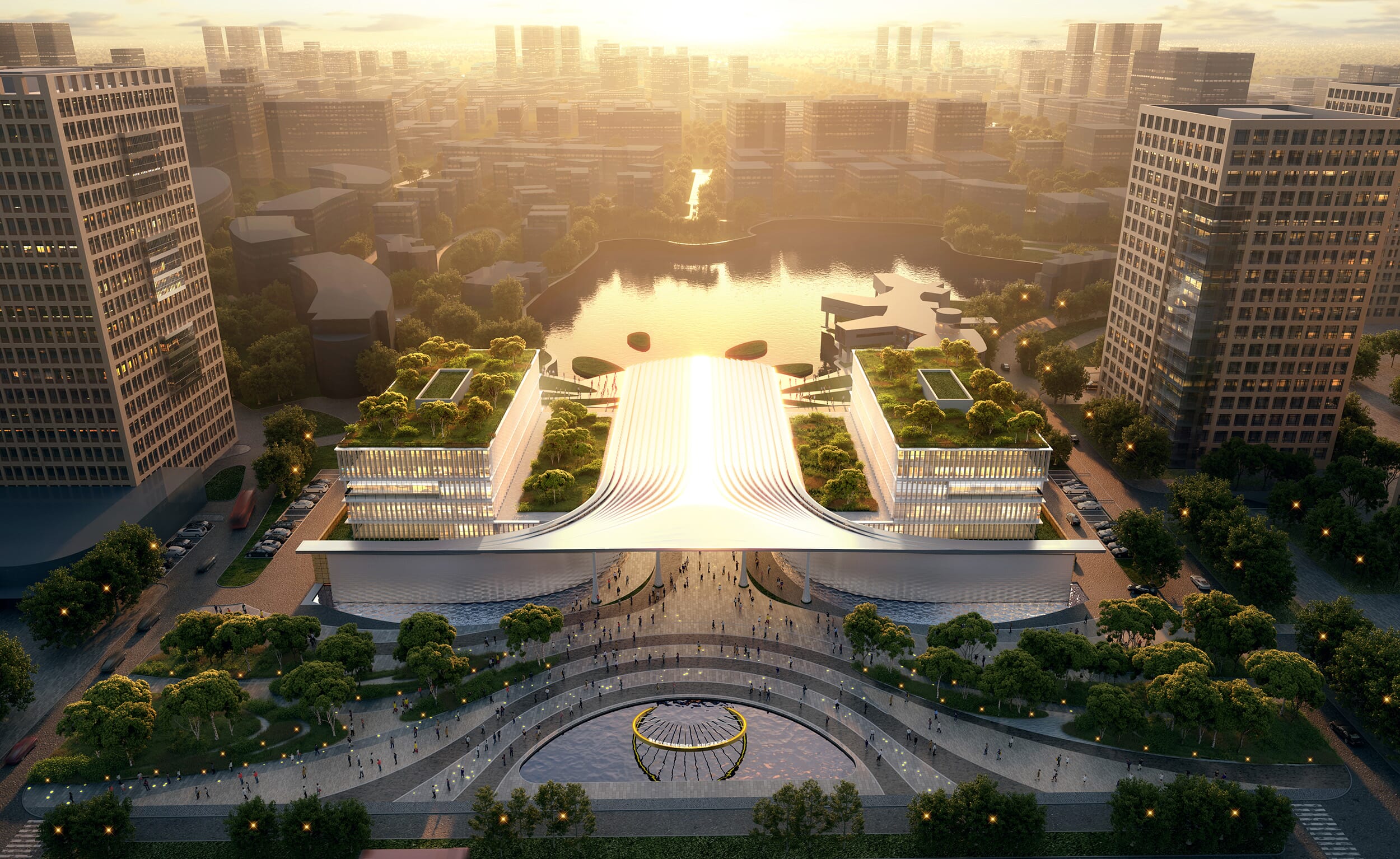
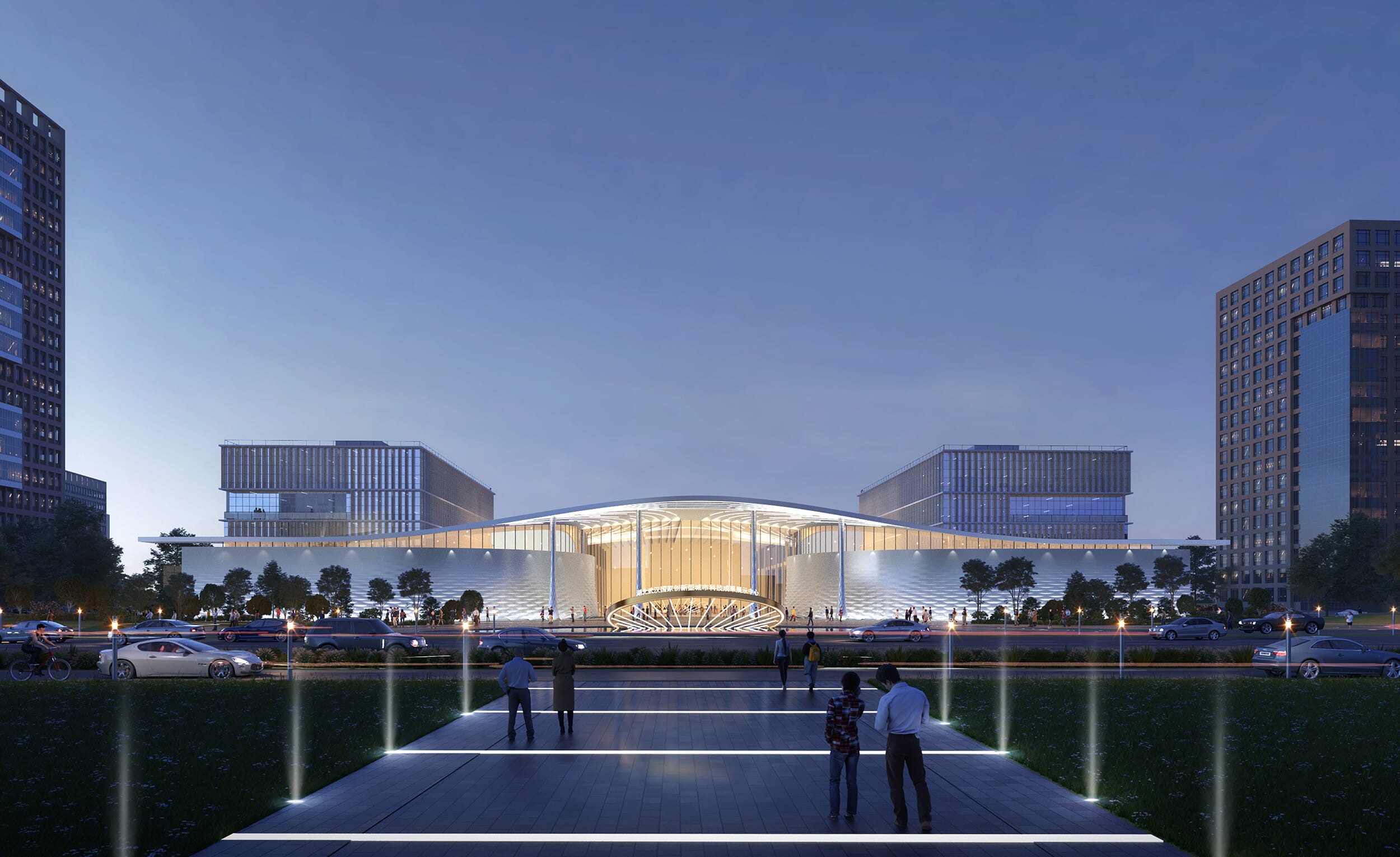
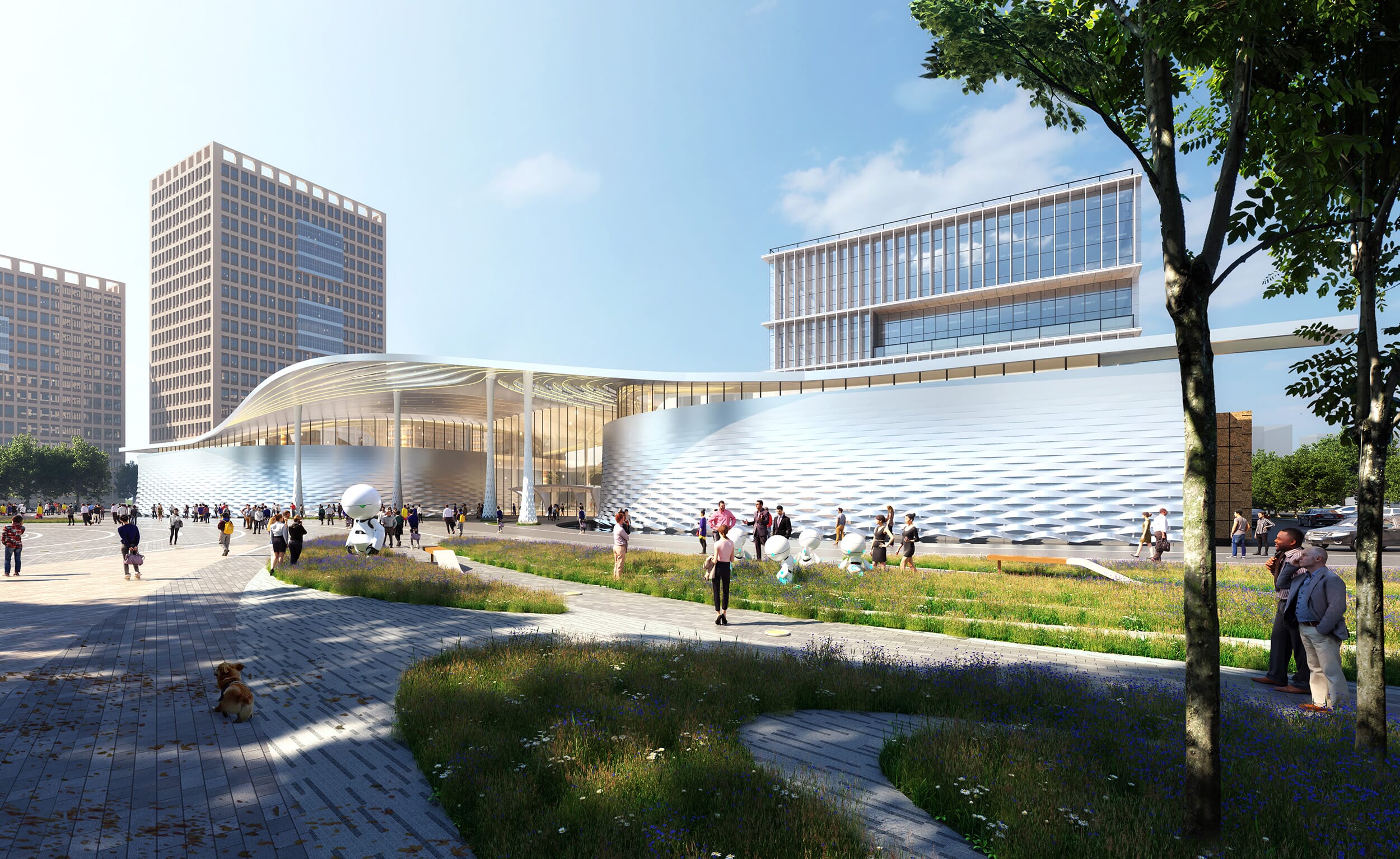
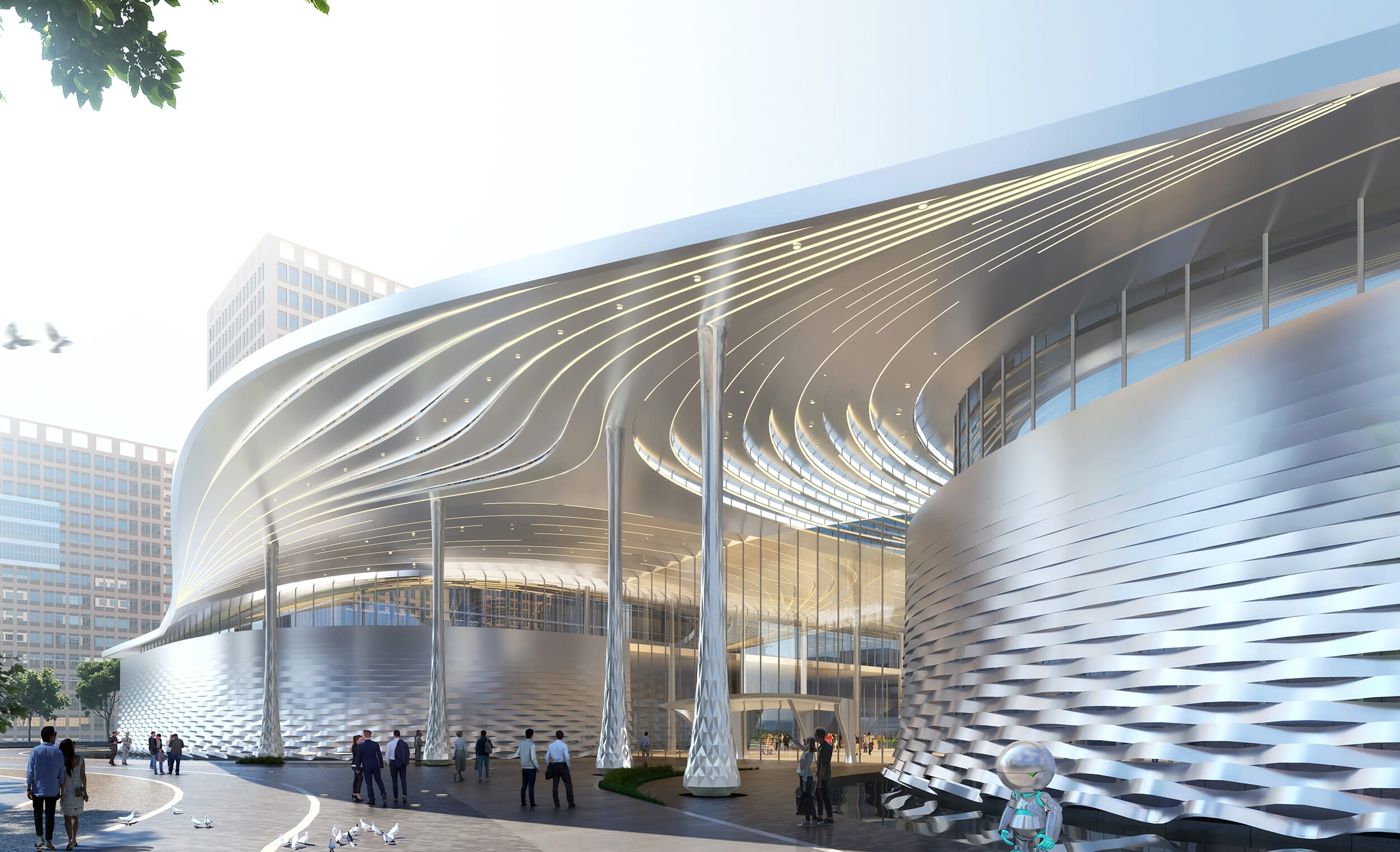
The first draft we called Scientific Magnetic Field. We let the roof spread horizontally as far as it could, dropped the two wings down and lifted the centre, leaving an east-west street running beneath a continuous eave. Above the roof, lake and park looked across at one another; below it, people moved through. The exhibition no longer hid itself in the depth of the volume. It was pushed forward behind a glazed street wall, so that passers-by could read the activity inside. The conversation began at the façade.
It was an outward posture, willing to tell Optics Valley’s story to every stranger who walked past. The roof read as a continuous curve drawn by wind; in evening light it became a long annotation to the district’s skyline, and after dark it released its inner light back to the street, becoming, in turn, a living room belonging to the city. We watched carefully that it should not speak too loudly: the façade stepped back a measure, so the eave could arrive first.
Scheme B: Inward
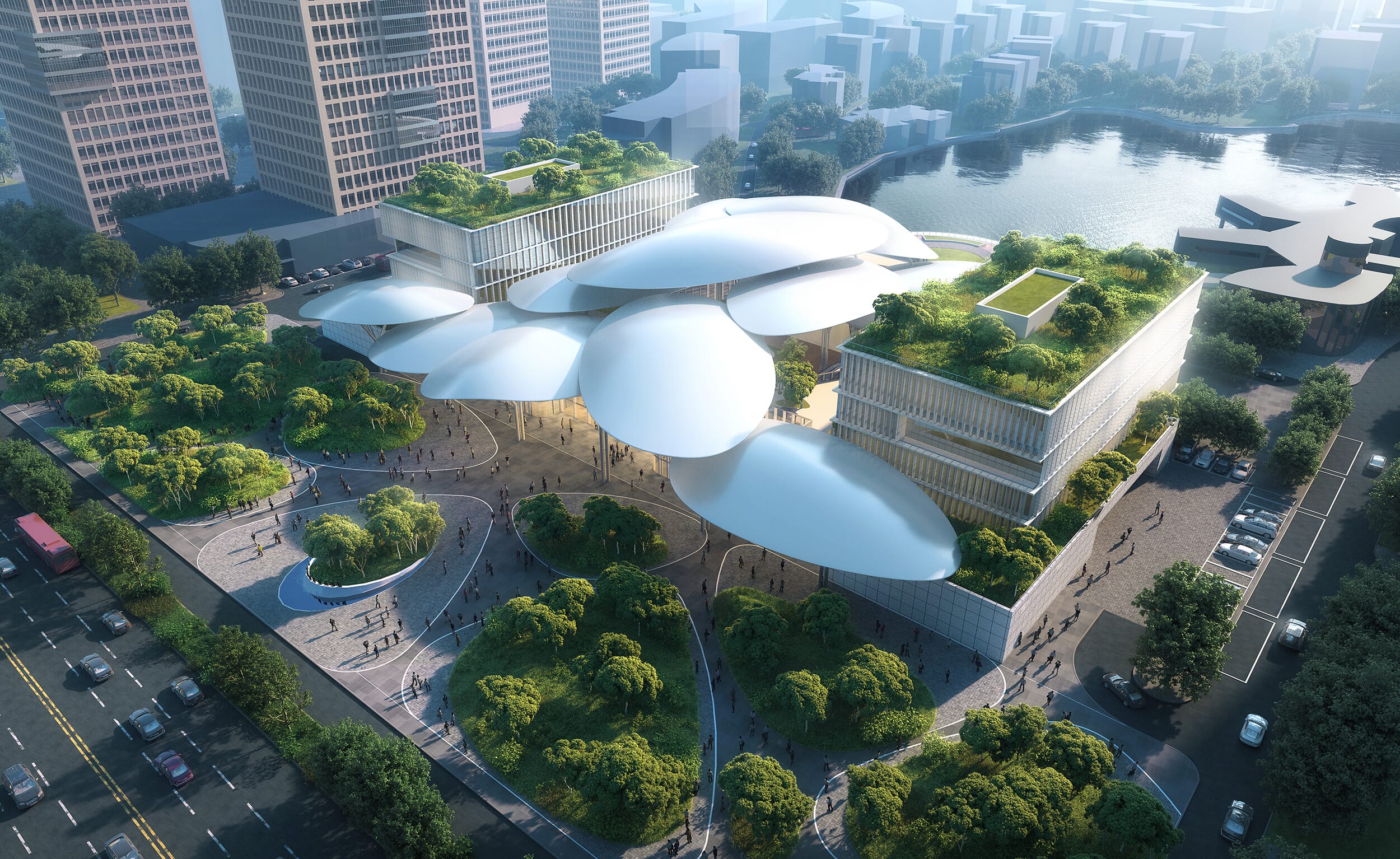
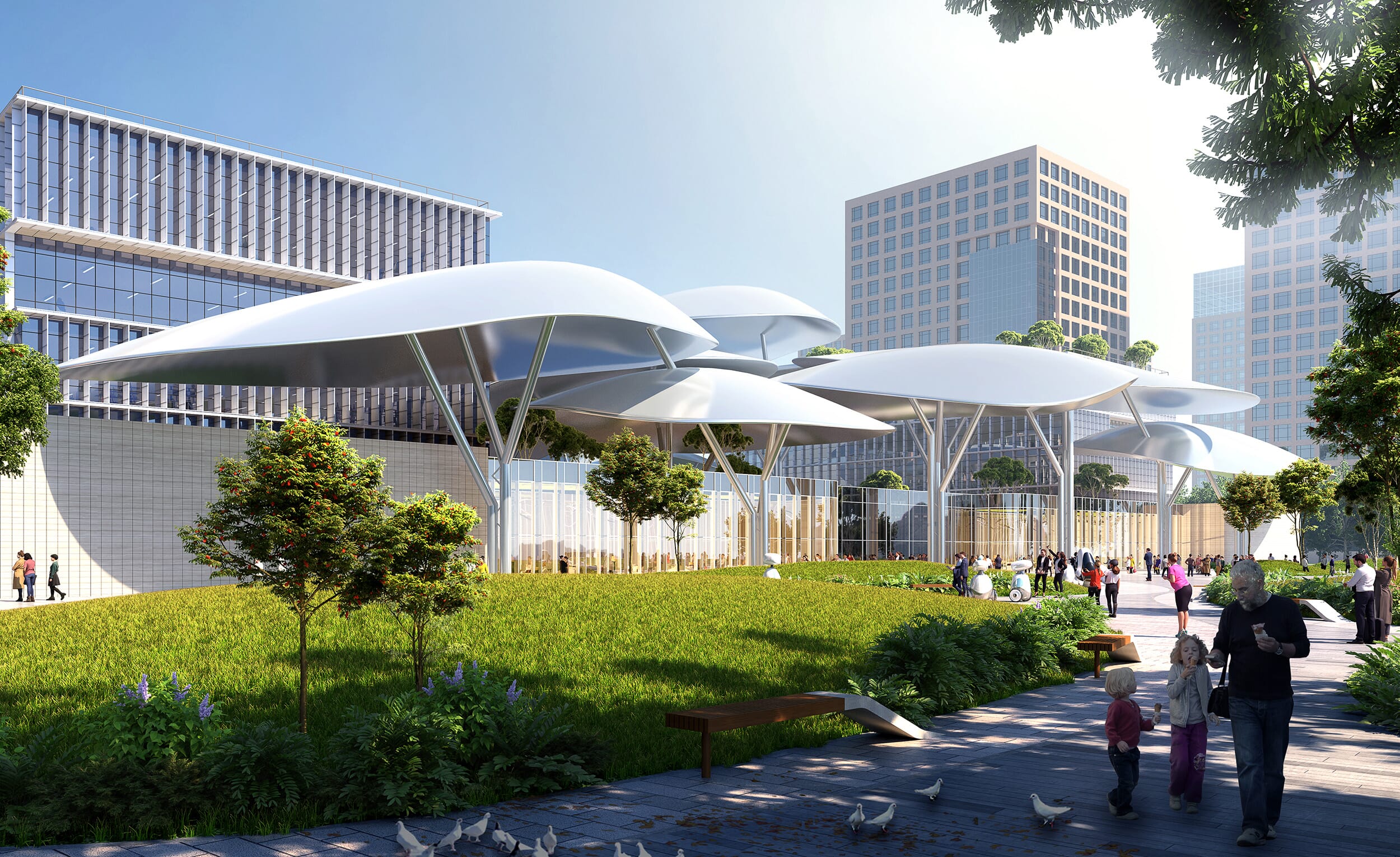
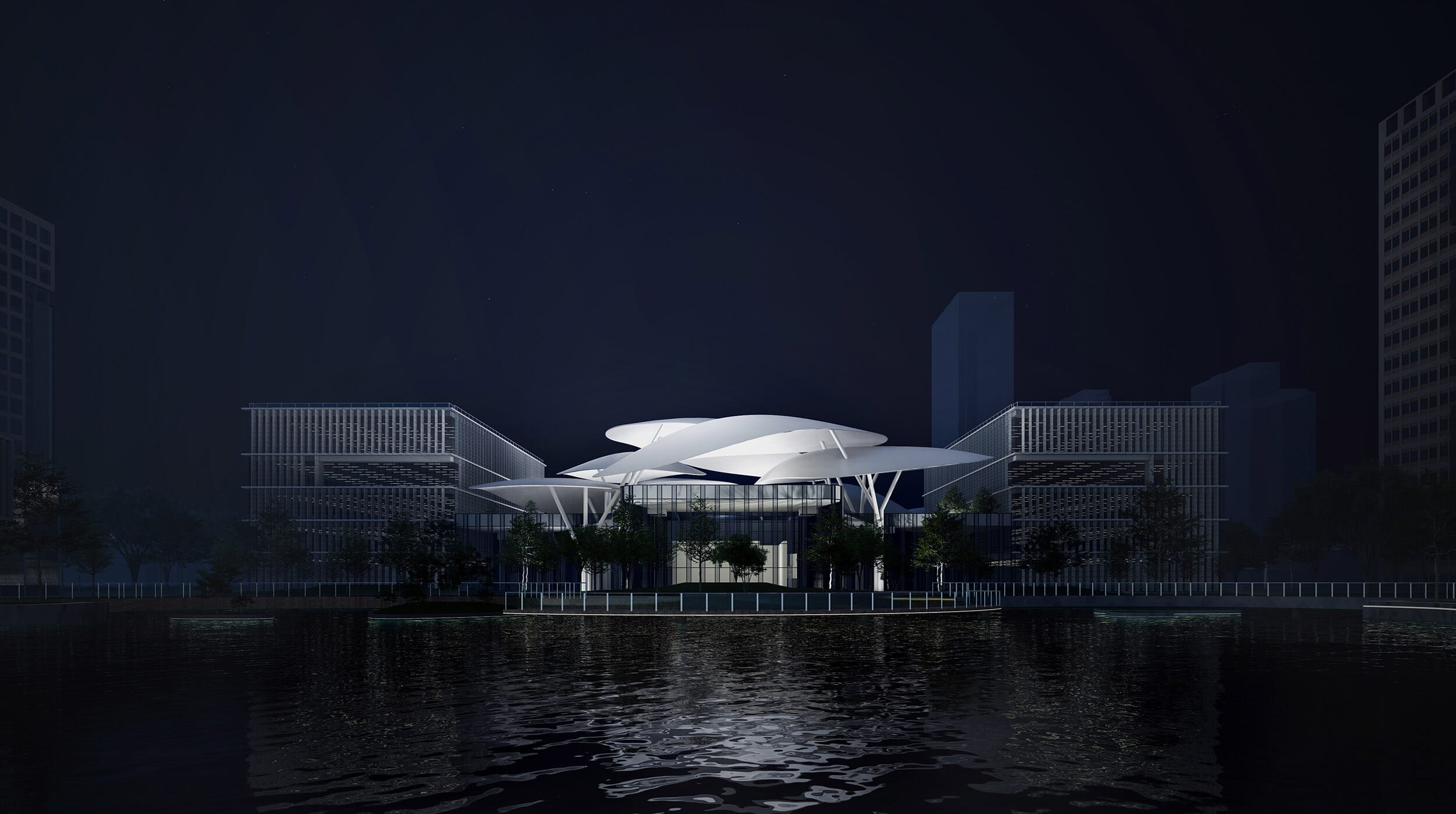
The second draft we called Forest of Peaks. We took the opposite posture: let the building grow quiet, gathered it into a set of stepped terraces and soft umbrella roofs that drew several small courtyards together. The courtyards yielded to one another, and the daily life of the building was kept inside, between them. Along the street we left only a single window, a glance for the passing eye, no active greeting.
It was the more restrained of the two, willing to first become a pause rather than a welcome. The umbrella roofs floated above the water, sieving shadow by day, holding light at night. Between the courtyards we left the spaces empty, so a walker could thread them freely. We imagined a slower way of using the place: people moving and stopping between courts without being guided, without needing to be seen. Perhaps this, too, was a kind of living room, in another sense.
Neither posture pretended to be the answer. They simply opened the same question from two sides, leaving it for the client, for the city and for the eventual users to answer in their own time: what kind of living room does Optics Valley need?