Wuhan Yangtze New District Foreign Language School
长江新区外国语学校
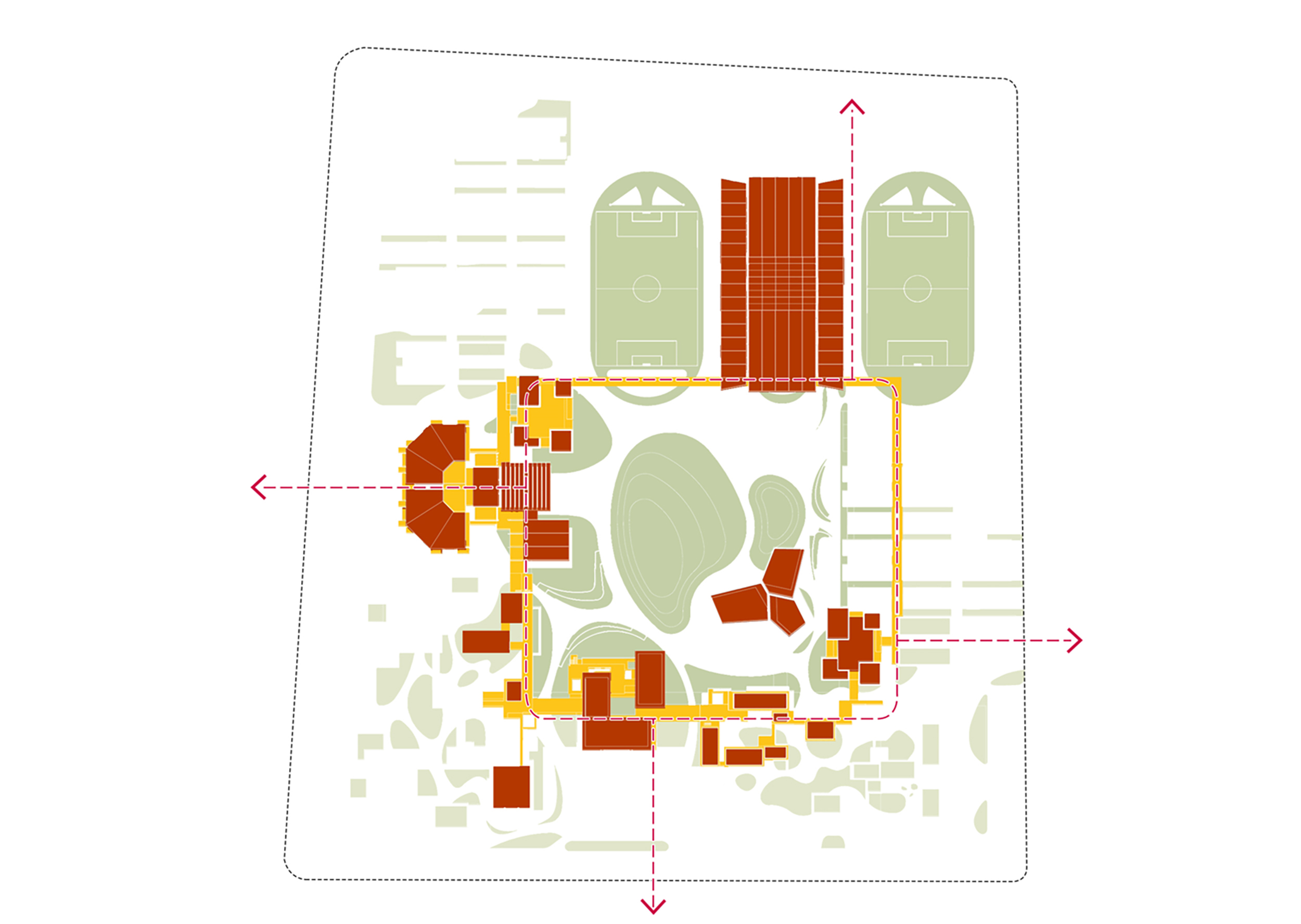
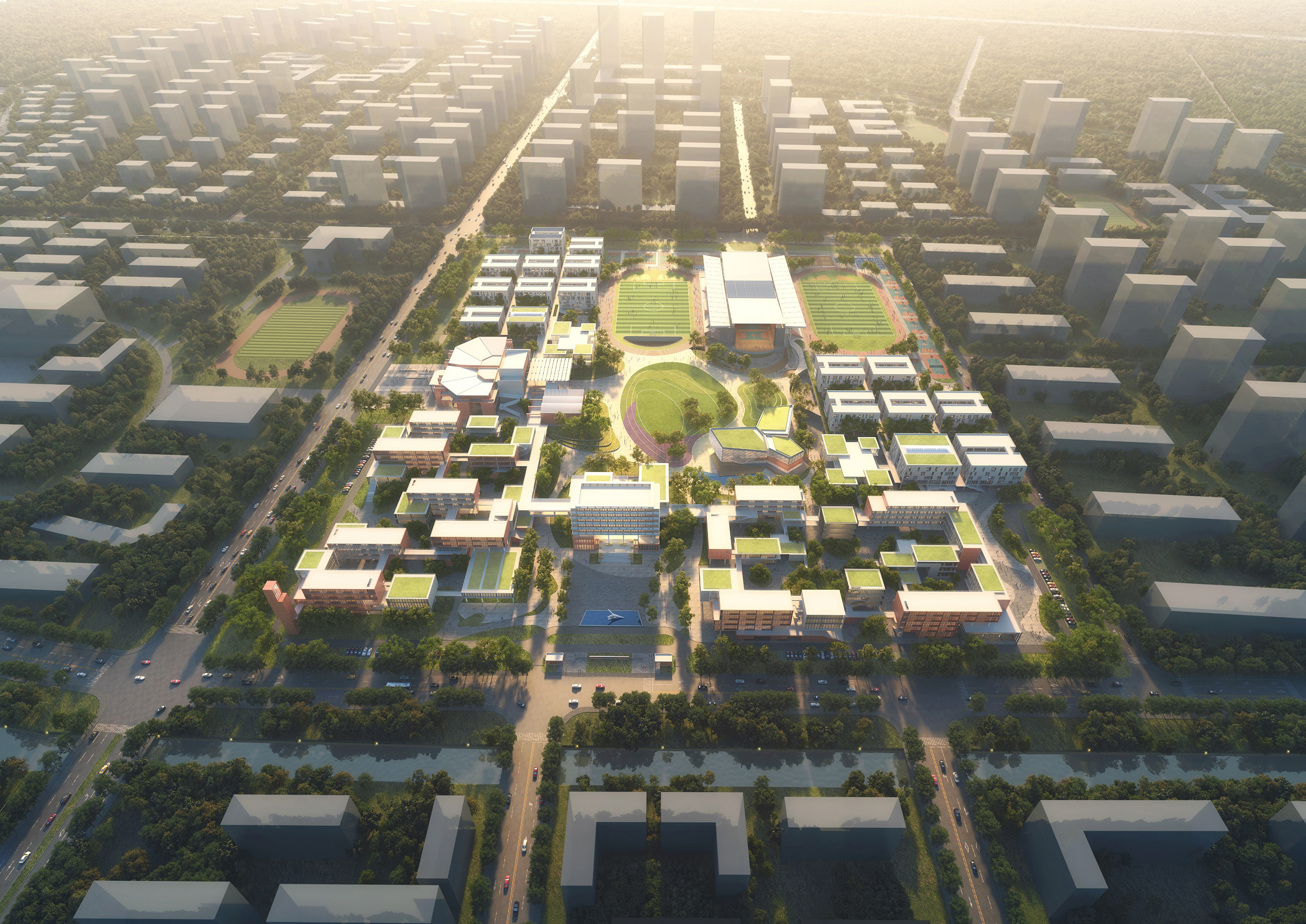
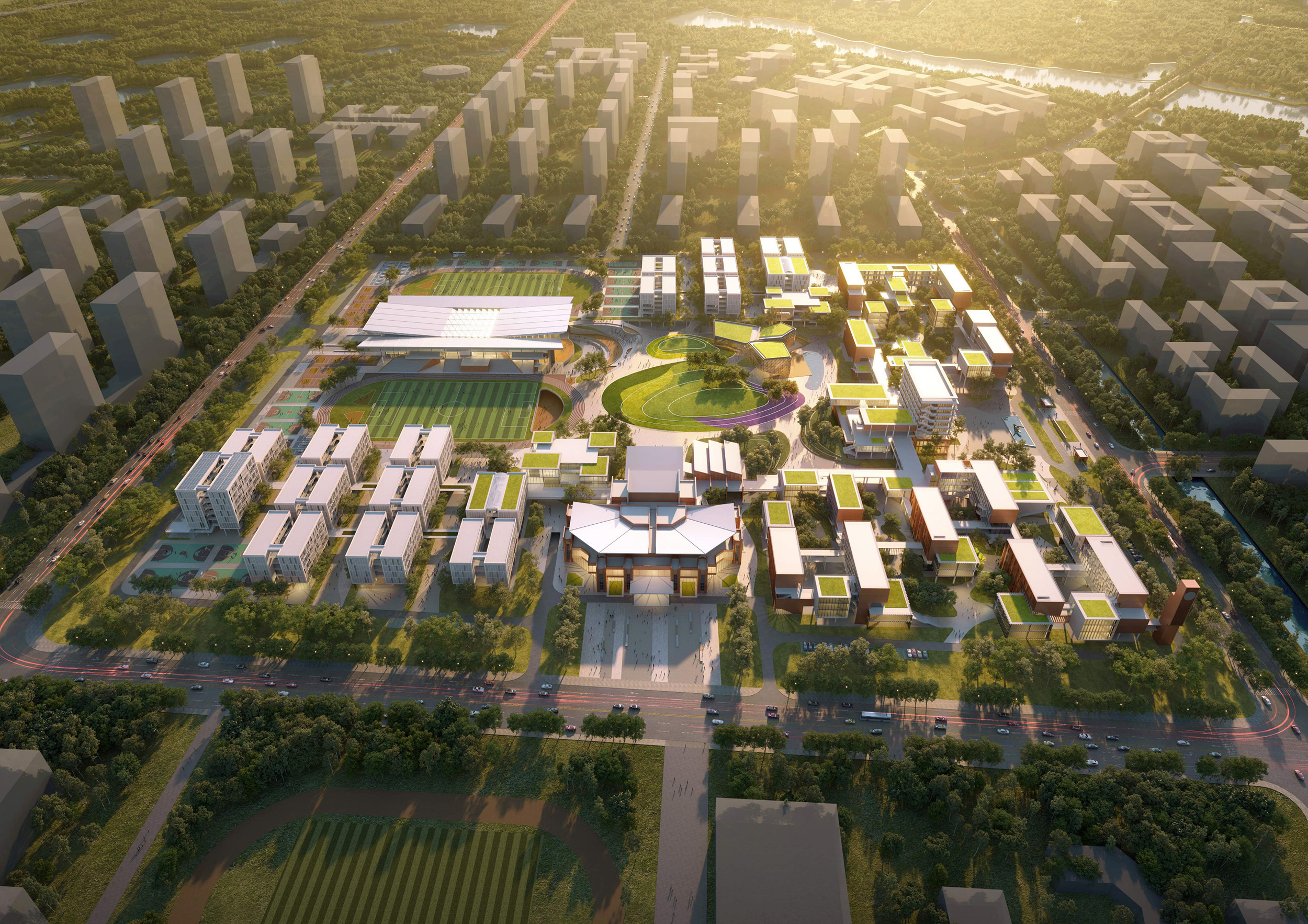
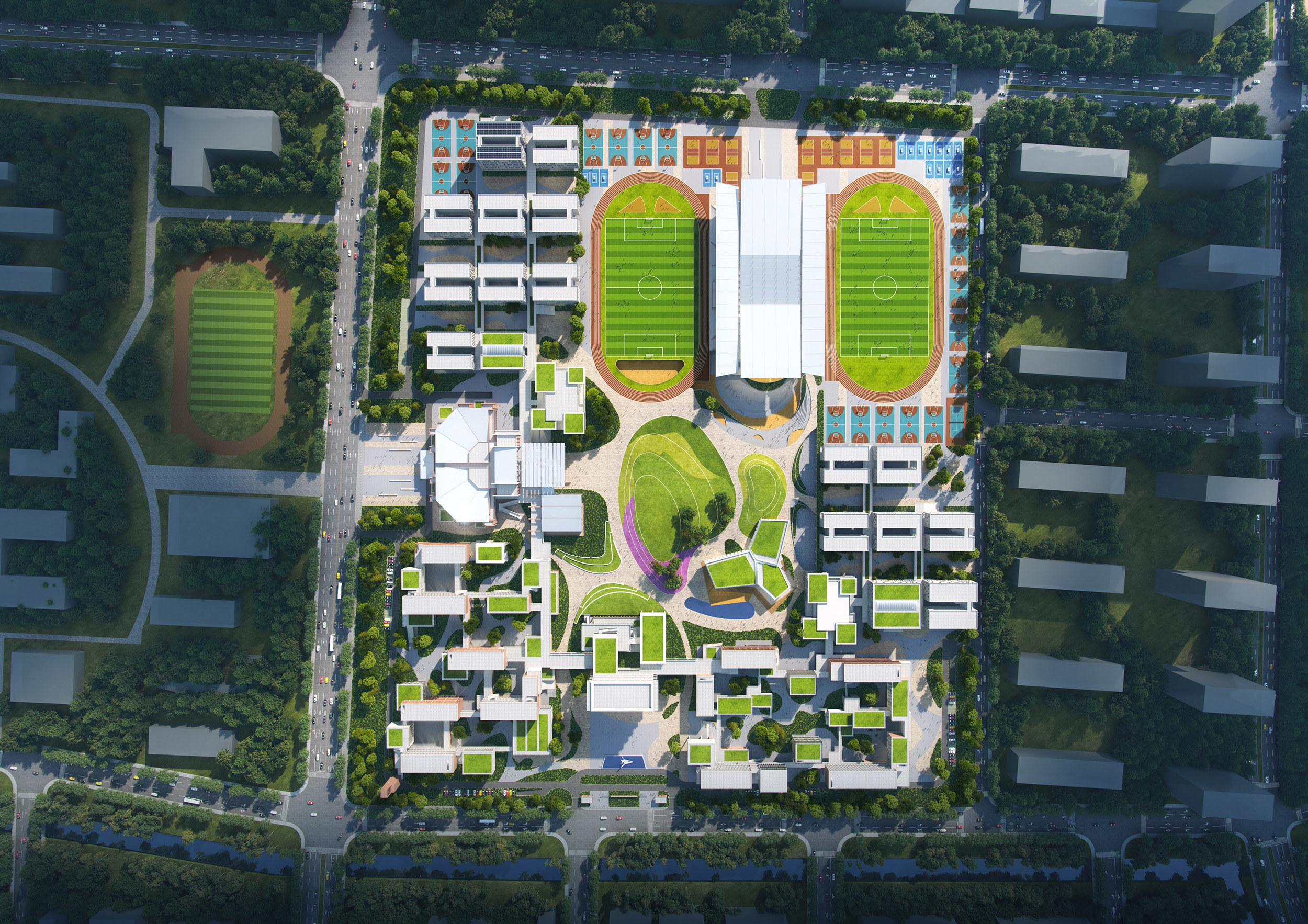
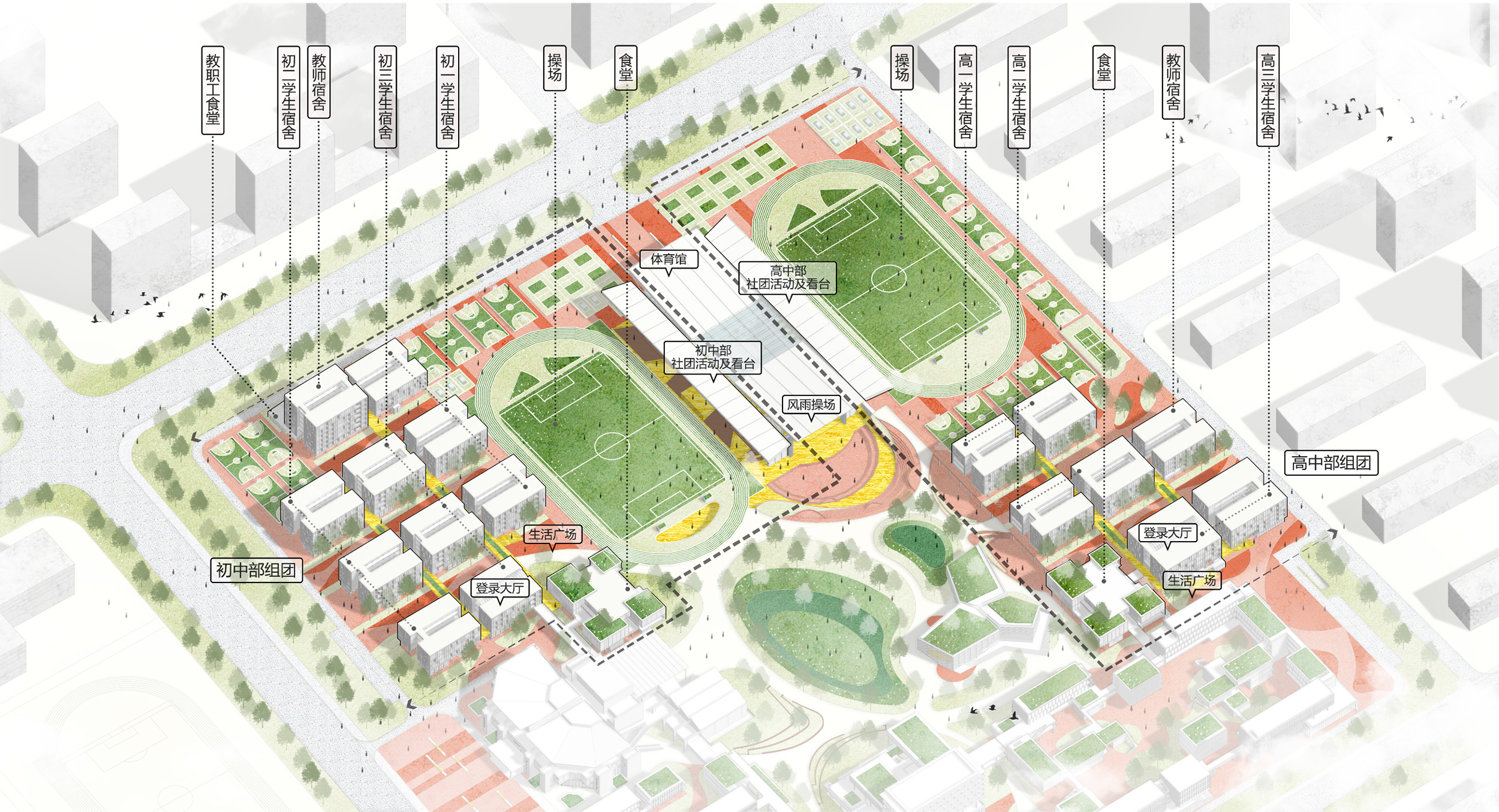
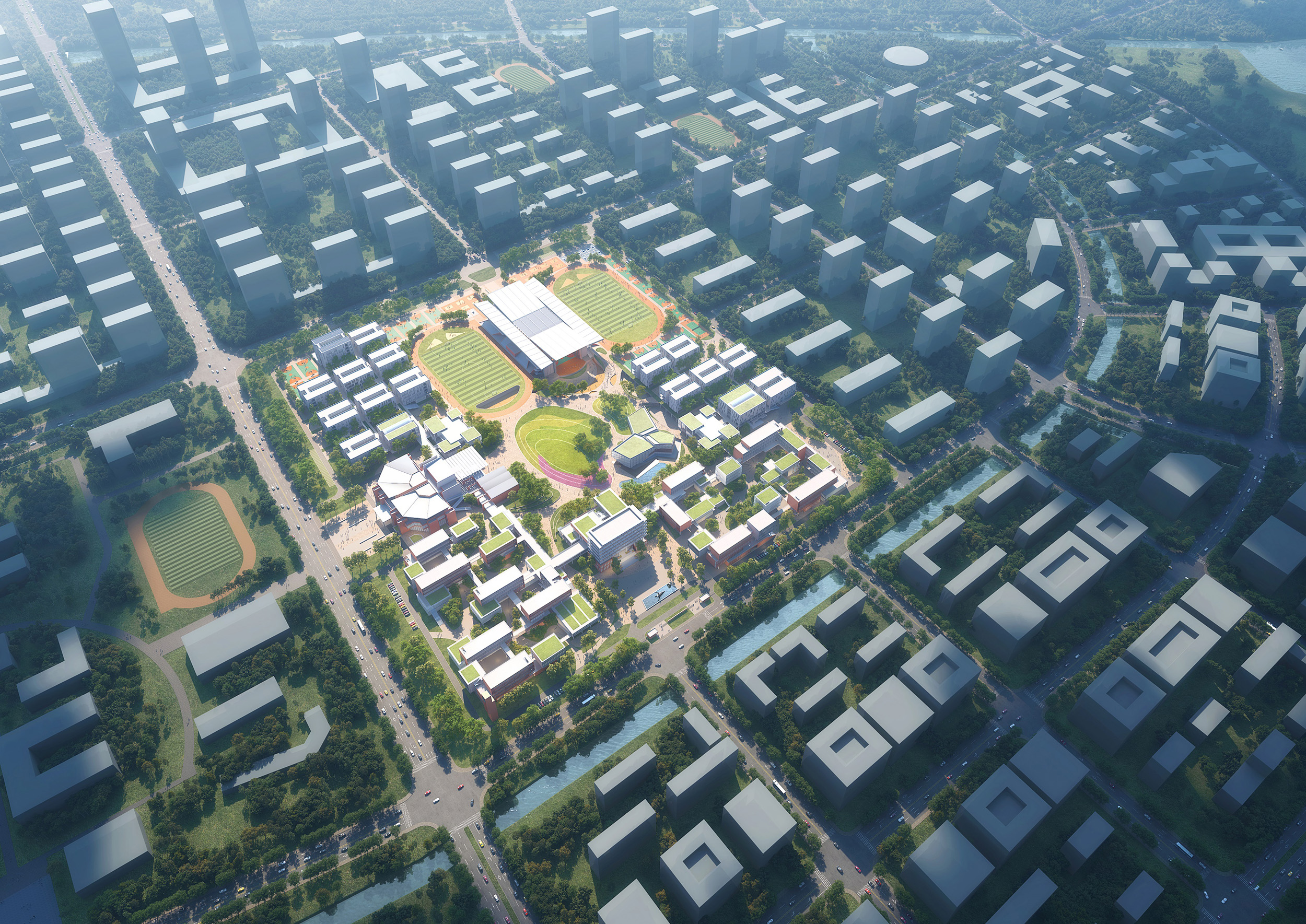
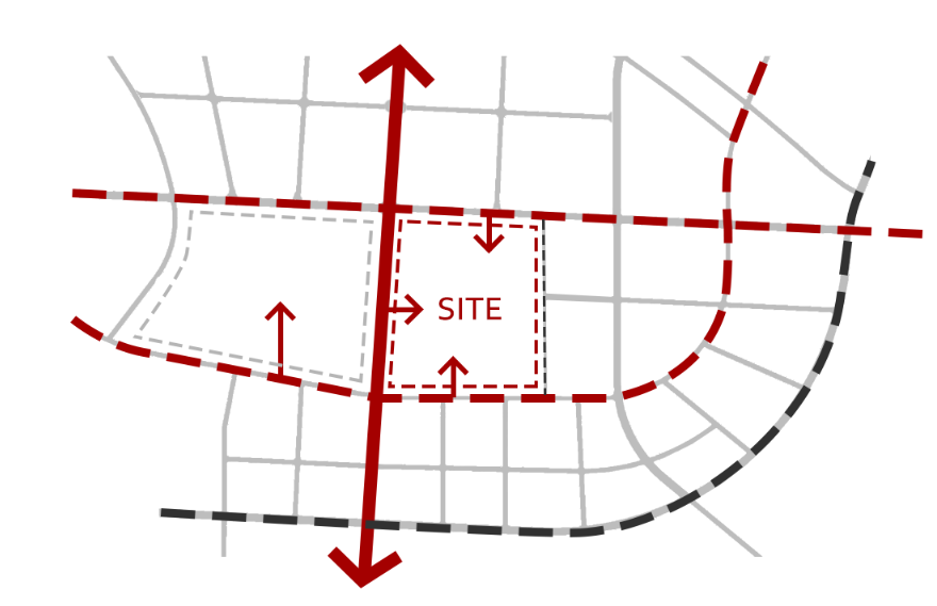
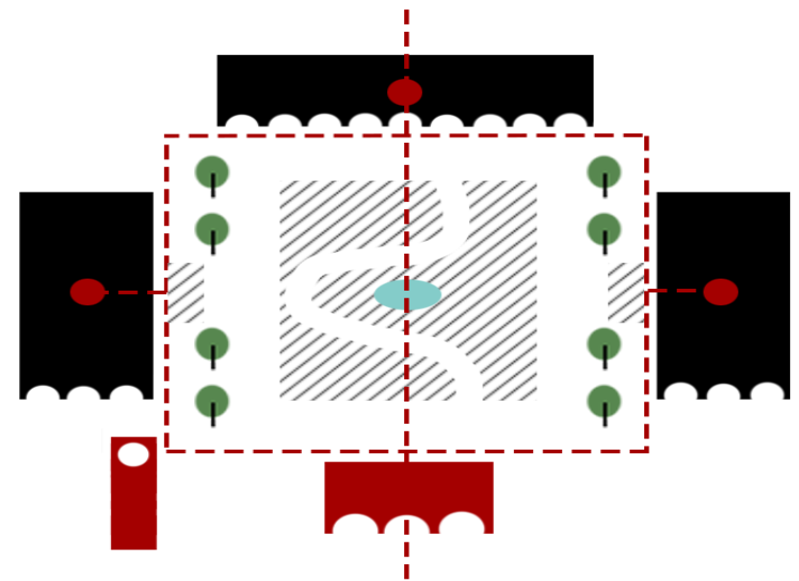
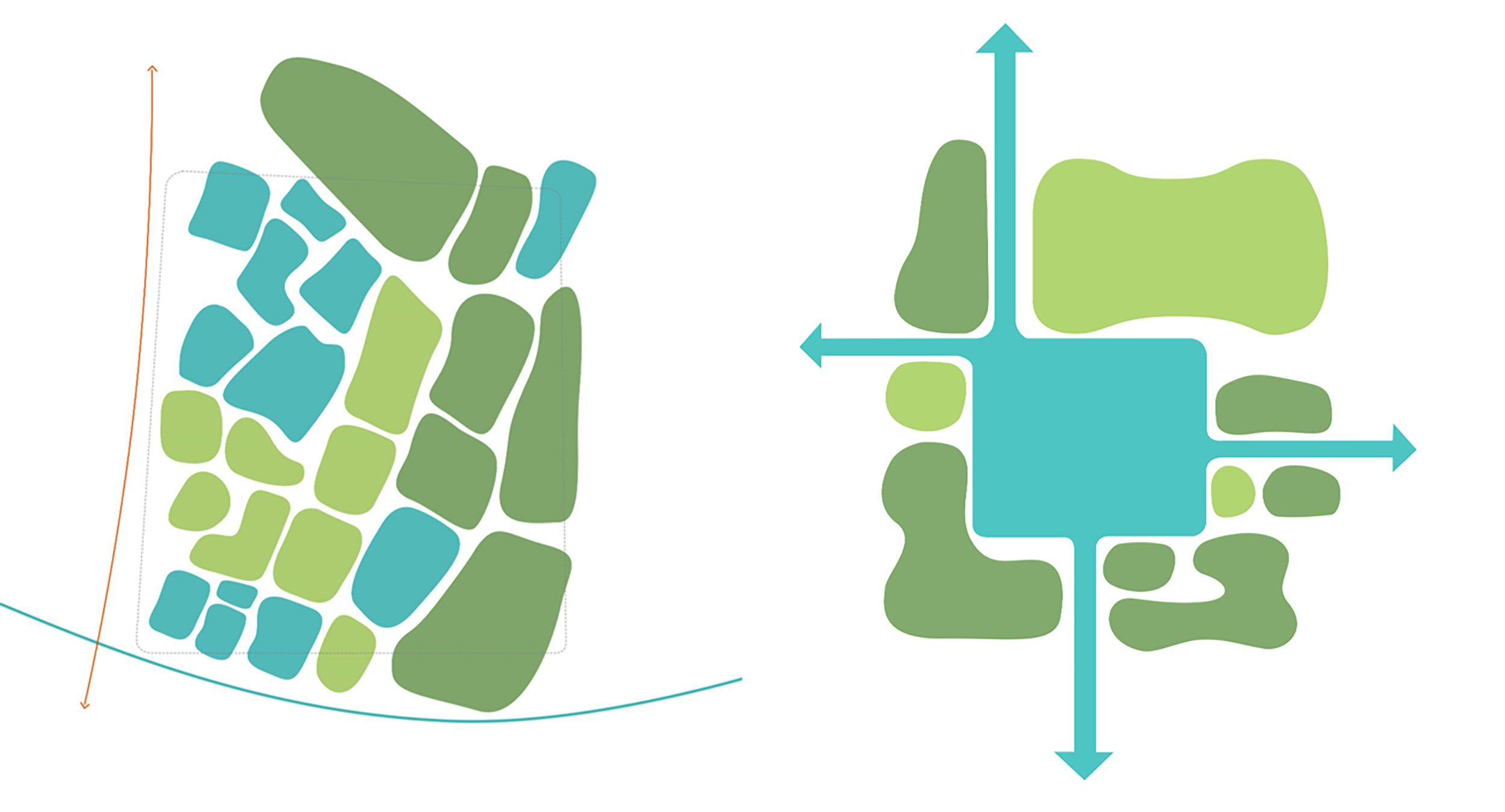
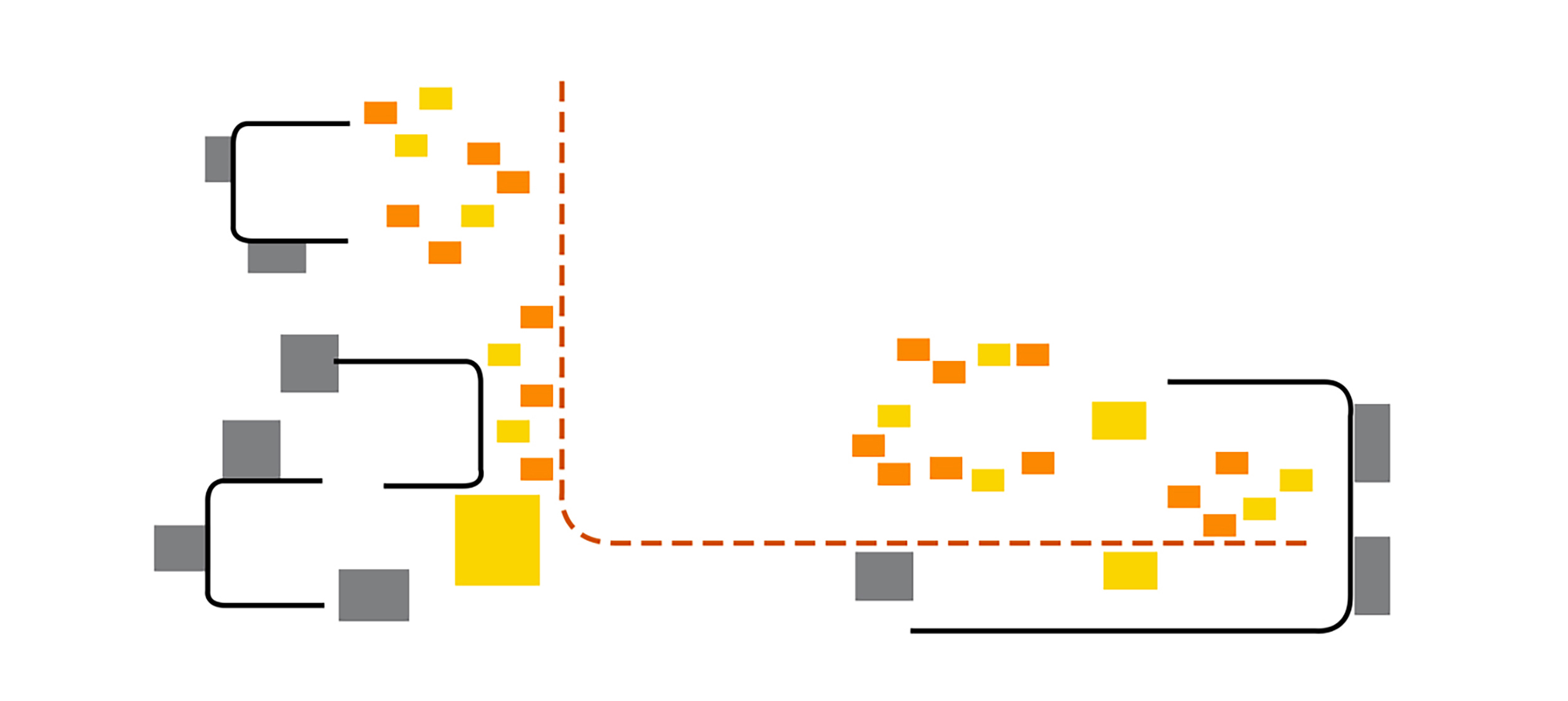
The site sits on the edge of a new district, open on four sides: Shenghai Avenue to the west, planned roads to the north, soft ground to the south-east. Before drawing a building, we drew a single east-west axis: the campus becomes a piece of the city's path from arterial to lakeshore, not a closed compound. Classrooms lift to the north to catch stable light; sport fields step down to the south to meet the street; the shared and cultural programmes sit at the centre of the axis, bound together as a cross-pinwheel. To open, rather than to enclose: that is the school's reply to the edge of the city.
- Year
- 2023
- Location
- Wuhan, Hubei
- Typology
- Education
- Status
- schematic
Site
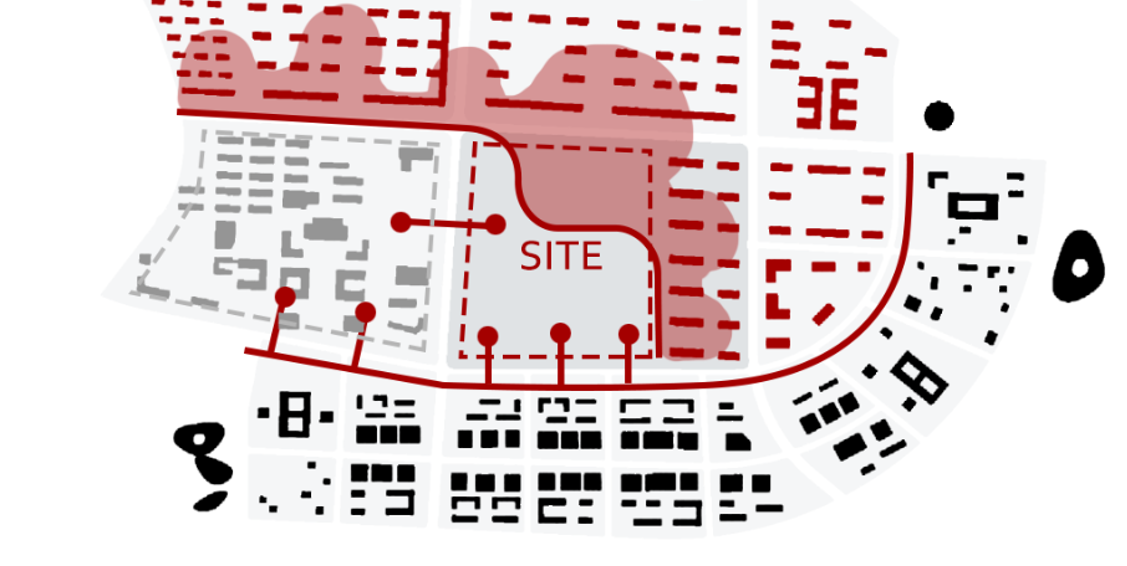
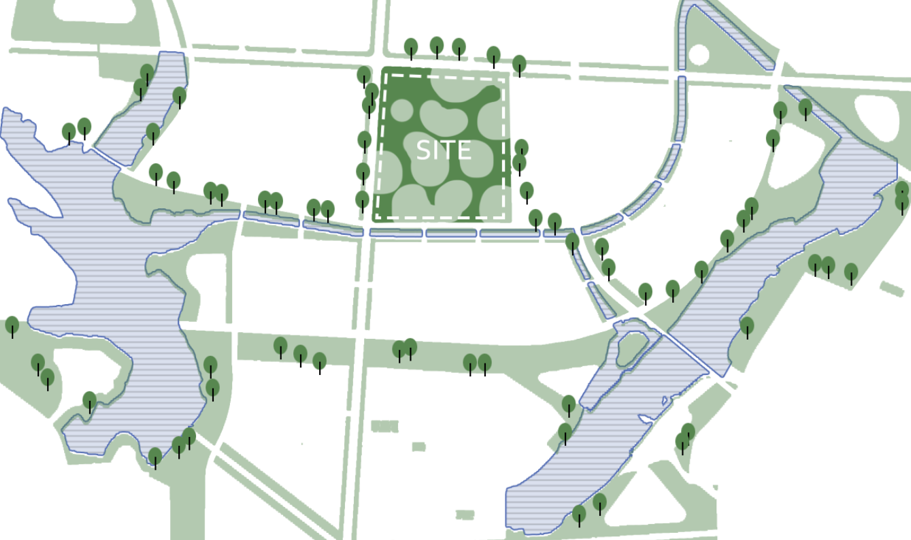
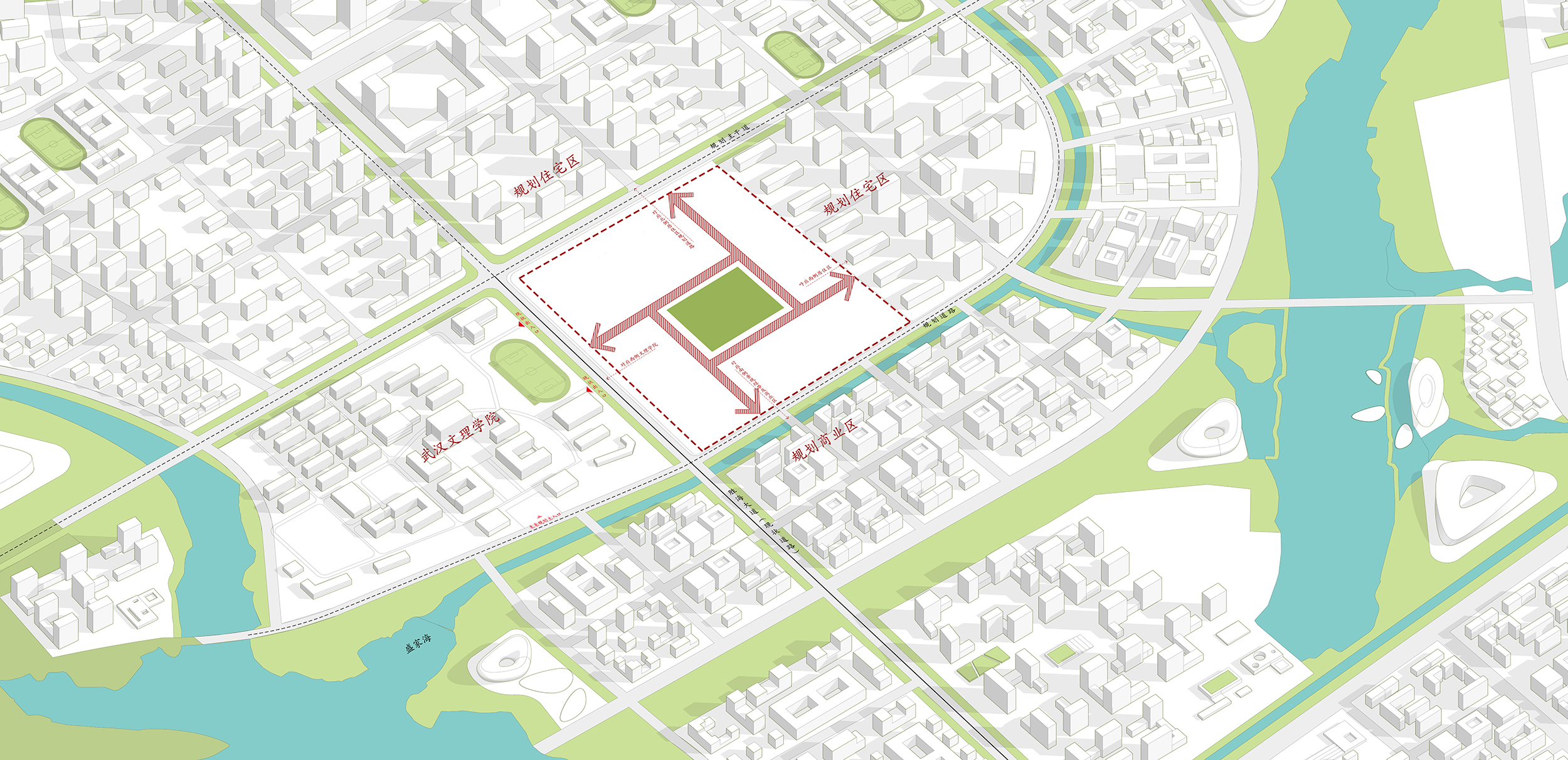
When we read this site, we read its edges first: Shenghai Avenue to the west, a planned road to the north, and to the south-east a soft, unfilled remainder. A piece of edge-land open on four sides, belonging to no settled urban grain yet pulled by three futures at once. In a state held this open, any premature gesture of closure felt rude.
We did not rush to draw a building. First we watched how the road network would cut through, then how the scattered residential, business and industrial districts around it would unfold in sequence, and from which direction the city would slowly grow in.
What made us pause was the water. Tang Lake, Shengjia Sea and Xiangjia Inlet thread together into a blue-green vein, and the site itself still carries a quilt of fish ponds. We decided the campus should not cut this vein. It should let the vein run through. The school becomes a node within the water network, not a parcel set down on top of it. Earthwork is balanced on site; the silhouettes of the fish ponds are kept, becoming the ground tone of the central void.
Form
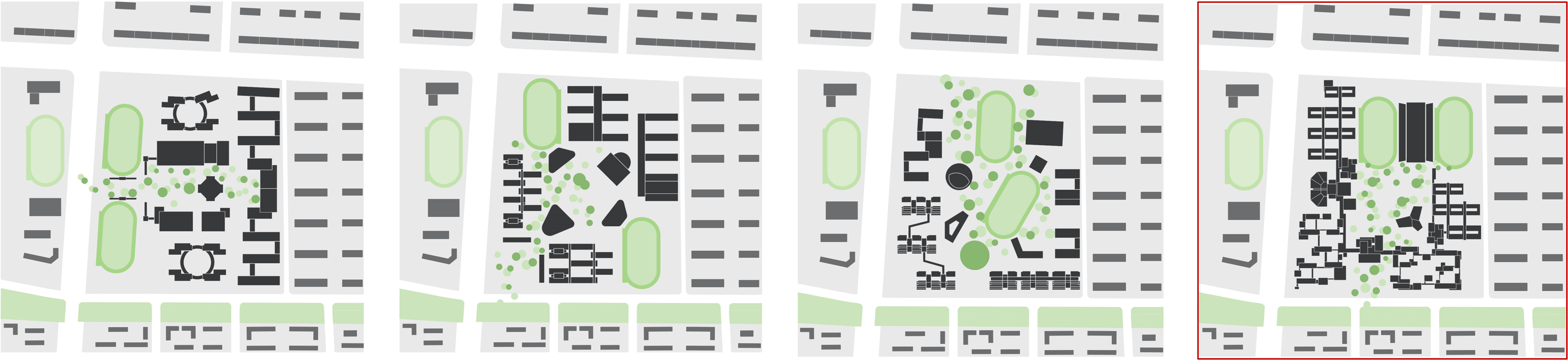
To catch the four-way openness while leaving the centre quiet, we tried many figures. A single transverse axis felt too hard; a diagonal cut the sport fields into pieces; a longitudinal park pushed the running track into the middle and refused to yield to the four neighbours. What remained was the cross-pinwheel: four teaching clusters around a central garden, each stepping back one move outward, letting the streets and the ponds in.
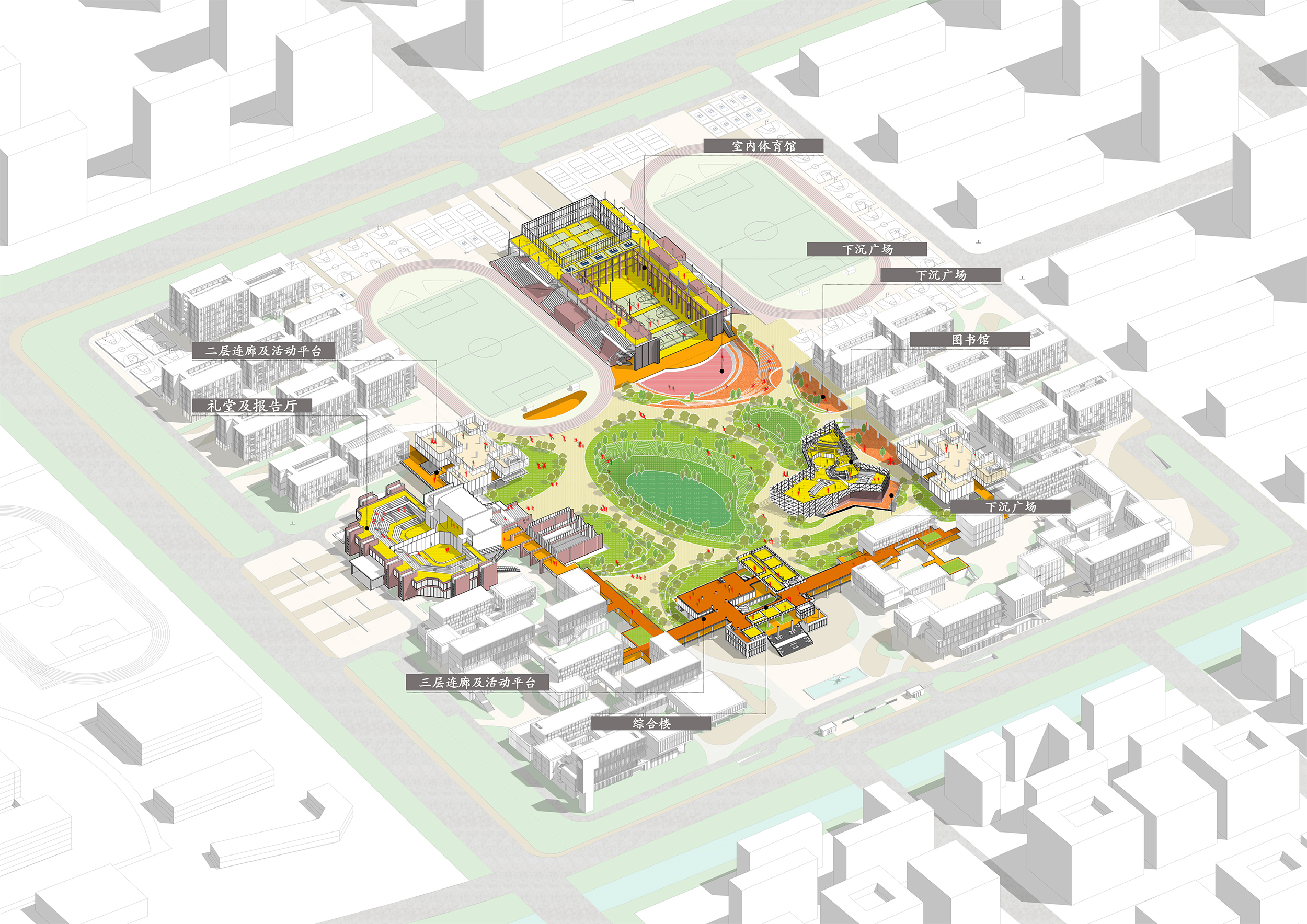
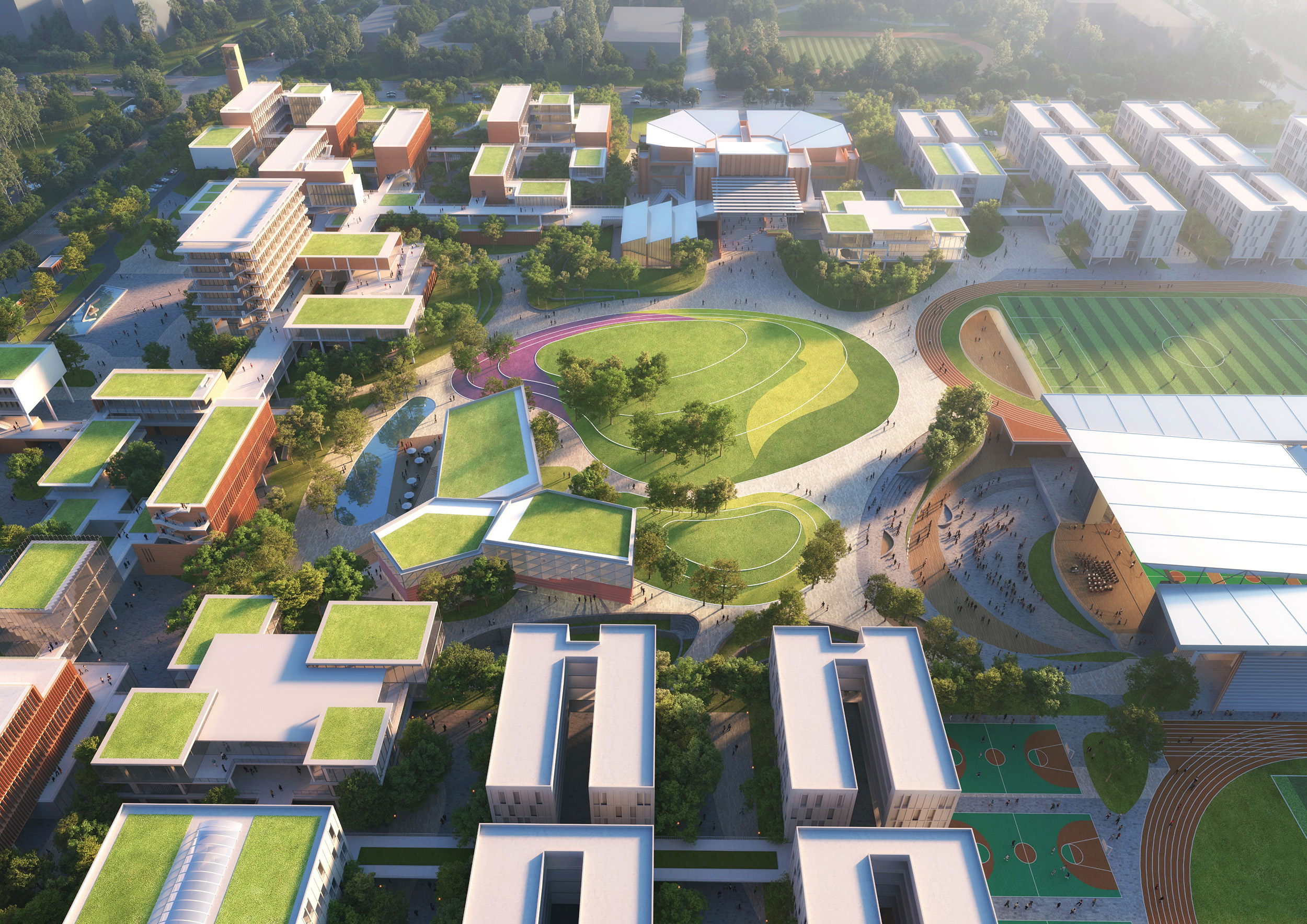
The centre of the pinwheel is not a point. It is a piece of breathing void. The central garden is set low, like a quiet basin; the four-way programmes lift up from its rim to catch light, catch air, and catch the people who walk in from the city’s edge.
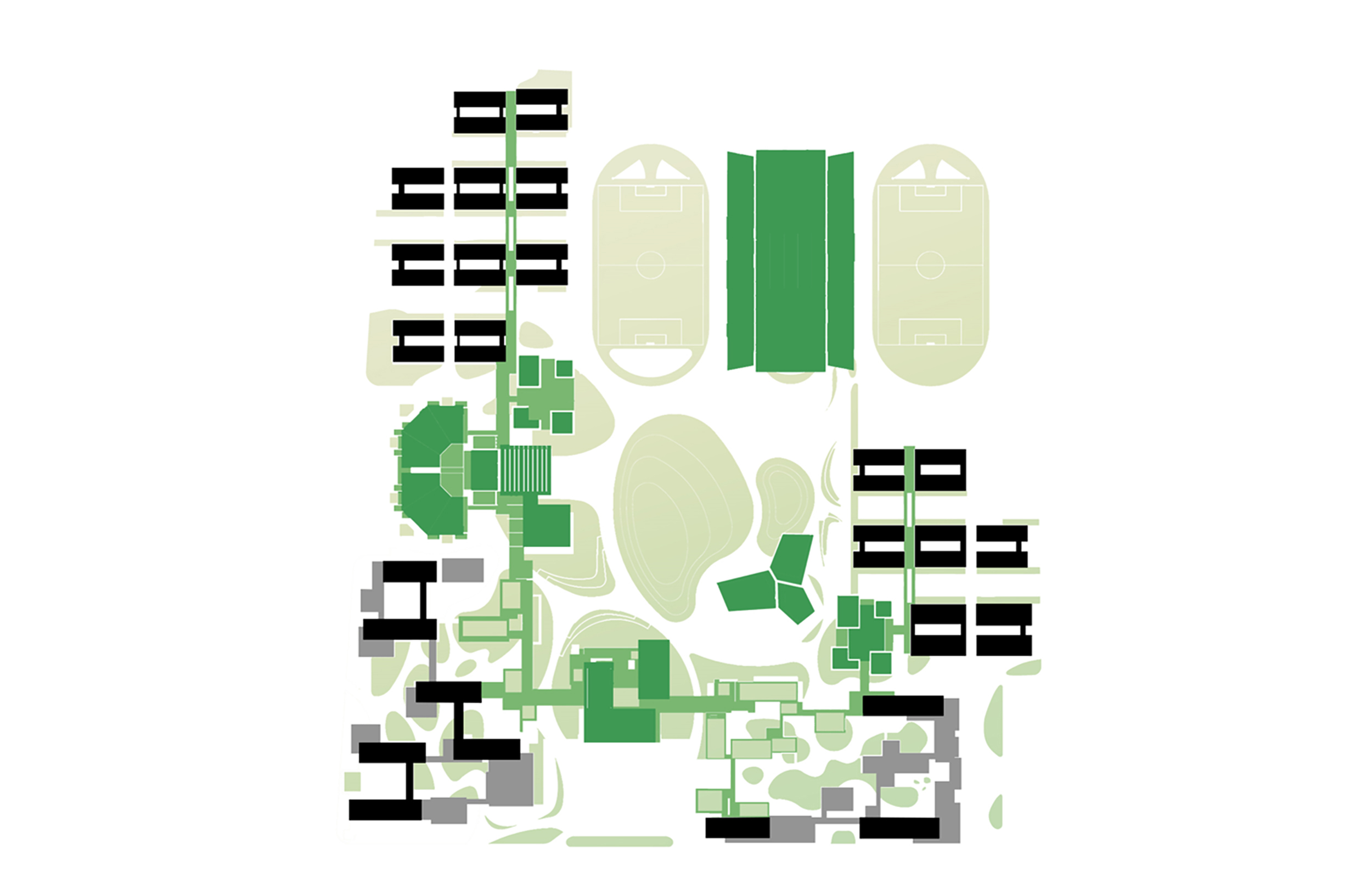
A second restraint: we made the classrooms a continuous, low-keyed carpet. We did not want any single block to overshadow the central garden, so the teaching clusters were brought down as a whole, leaving the height to the auditorium, the library and the gymnasium, the public volumes that genuinely deserve to be seen.

Public
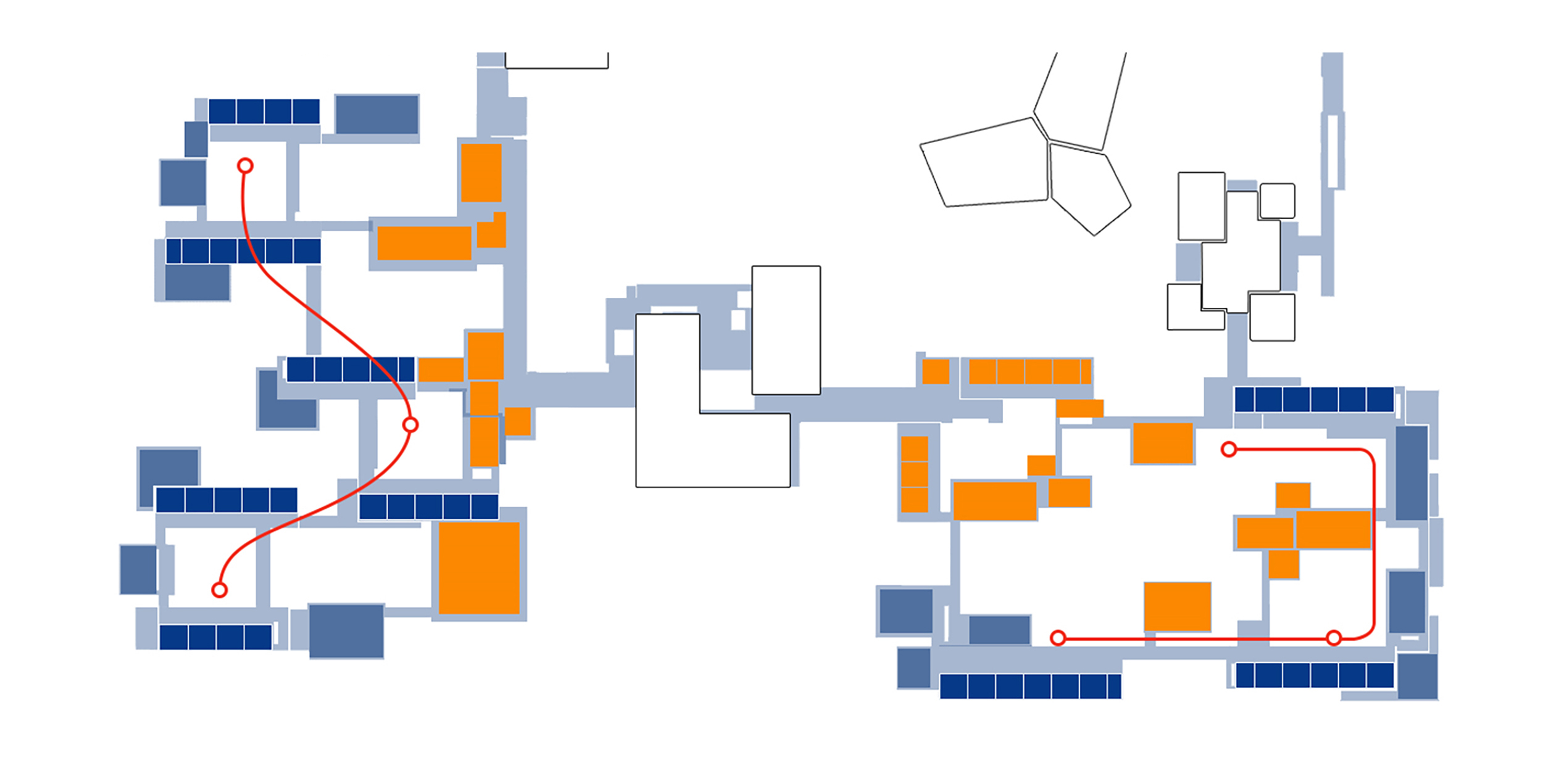
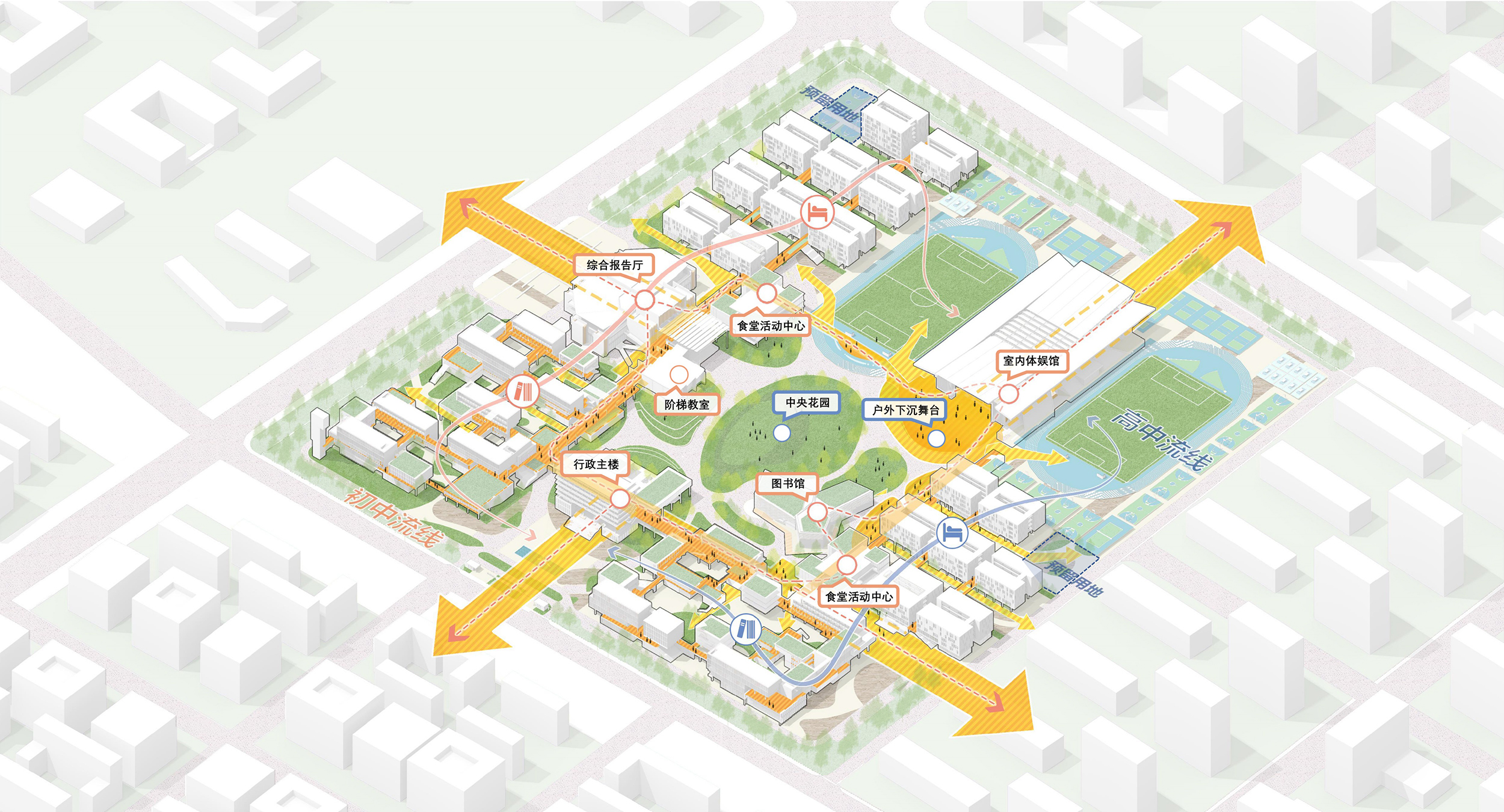
Threaded together, the four wings of the pinwheel form the campus’s public ring: auditorium, multi-purpose block, library, indoor gym, connected by a layered pedestrian network that runs around the outer edge of the central garden. Walking this ring should not feel like moving from one building to the next; it should feel like moving from one segment of public life to another.
The ring does not close. It opens on all four sides, letting the streets, the lakefront walk and the shared community life come in. For a foreign-language school sitting on the city’s edge, the answer we wanted to give was this: not to enclose, but to leave open. To leave open a path, leave open a centre, leave open a quiet in which the campus and the city can speak to each other.